Phase 3 Trial Finds Dual-Agonist Drug Survodutide Cuts Weight 13.1% in Adults With Type 2 Diabetes
In a 755-person trial published in the New England Journal of Medicine on October 1, 2026, weekly survodutide produced up to 13.1% average weight loss and a 1.21-point drop in HbA1c, but nearly a fifth of participants stopped treatment over gastrointestinal side effects.
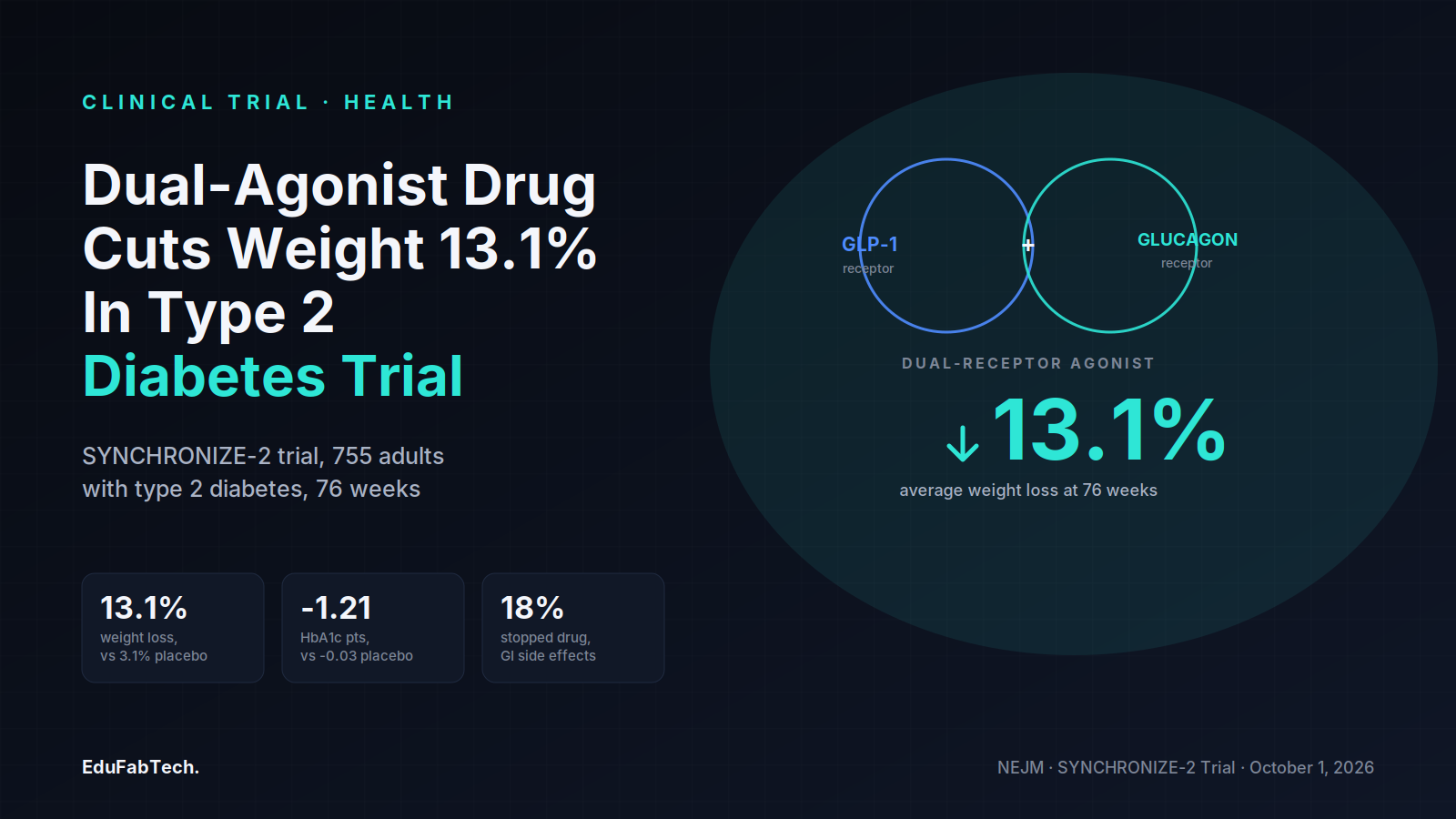
A phase 3 trial of survodutide, an injectable drug that activates both the glucagon and GLP-1 receptors, found that weekly treatment produced average weight loss of up to 13.1% over 76 weeks in adults with obesity and type 2 diabetes, alongside meaningful improvements in blood sugar control. The results, from the SYNCHRONIZE-2 trial, were published by Wharton and colleagues in the New England Journal of Medicine on October 1, 2026, and presented the same day at the 62nd Annual Meeting of the European Association for the Study of Diabetes in Milan.
The trial, registered as NCT06066528, enrolled 755 adults with overweight or obesity and type 2 diabetes at sites across multiple countries. Participants were randomized to weekly subcutaneous survodutide, up-titrated to either 3.6 mg or 6.0 mg, or to placebo, with all groups also advised on diet and physical activity. The drug is developed by Boehringer Ingelheim under license from Zealand Pharma, and the two companies jointly announced the results alongside the journal publication.
Survodutide differs from single-target GLP-1 drugs by also activating the glucagon receptor, a mechanism companies are testing on the premise that it adds energy expenditure to the appetite-suppressing effect of GLP-1 agonism. SYNCHRONIZE-2 is the first of the drug's phase 3 obesity trials to study it specifically in people who already have type 2 diabetes, a population in whom weight loss on GLP-1-class drugs has historically been smaller than in people without diabetes.
What the trial measured
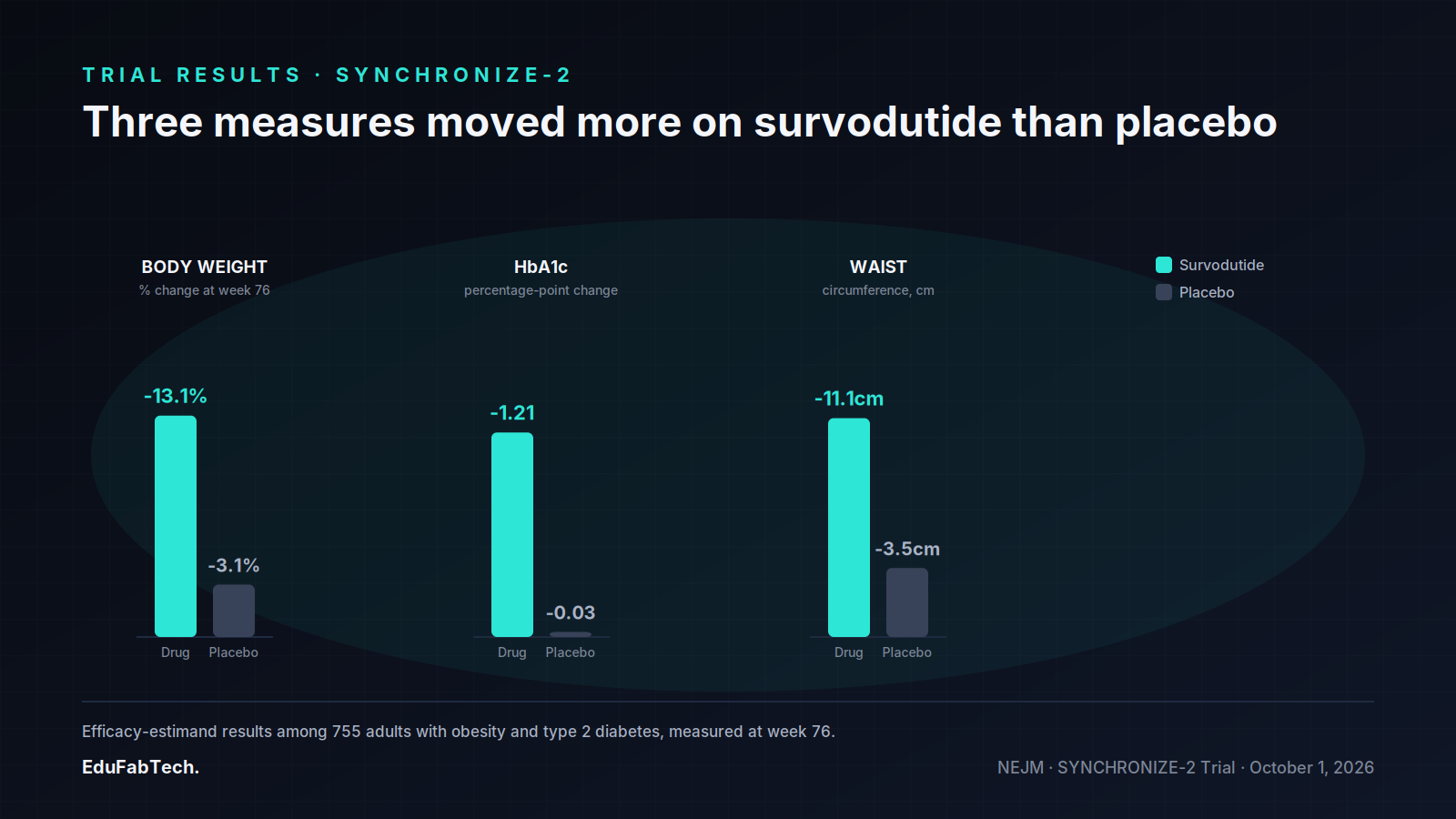
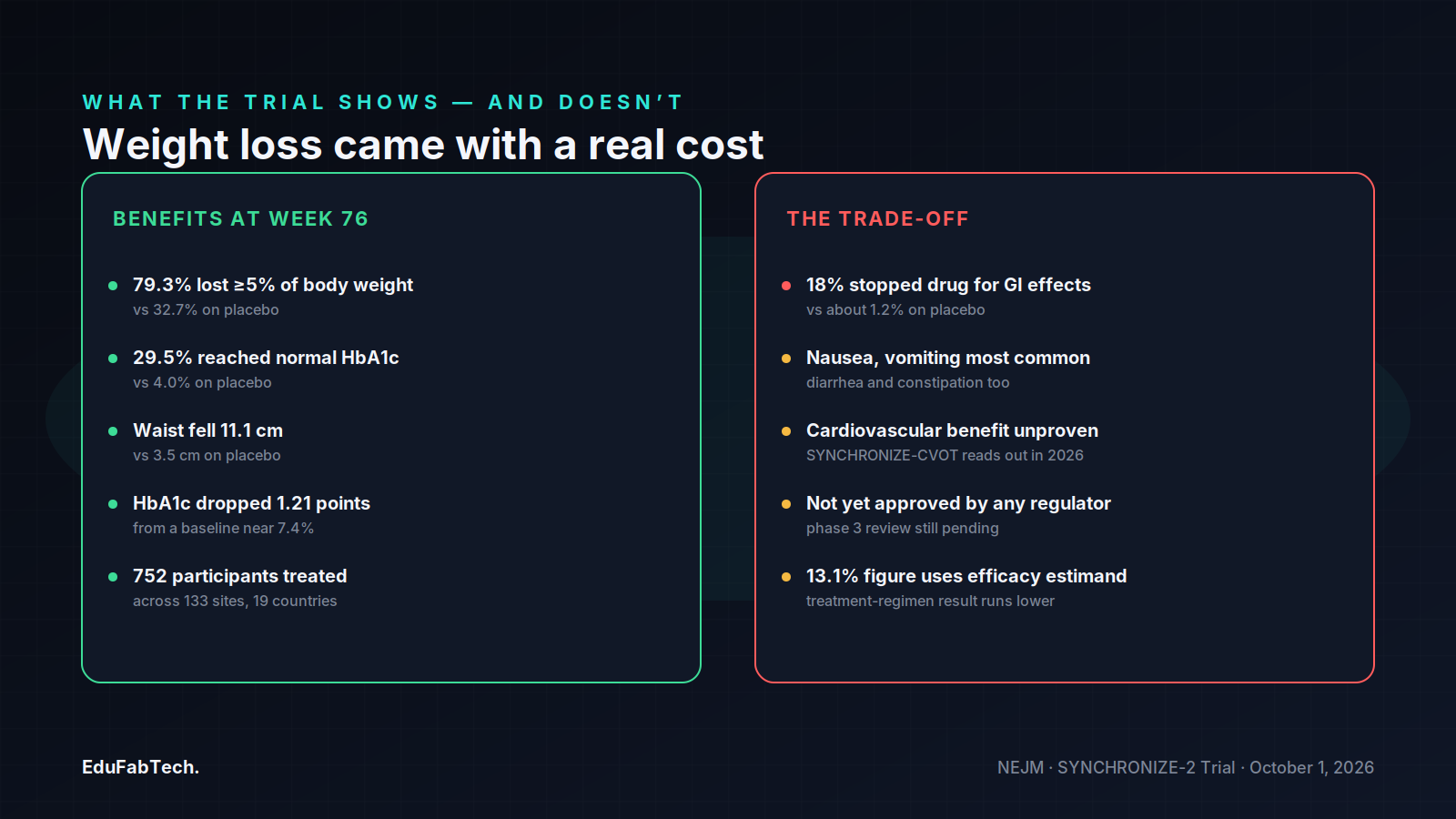
The co-primary endpoints were percentage change in body weight and the proportion of participants achieving at least 5% weight loss from baseline to week 76. Under the trial's efficacy estimand, survodutide produced average weight loss of up to 13.1%, compared with 3.1% on placebo, according to the results reported by AJMC. Among participants on survodutide, 79.3% lost at least 5% of their body weight, against 32.7% on placebo.
On glycemic control, a secondary endpoint, survodutide reduced HbA1c by up to 1.21 percentage points from a baseline around 7.4%, compared with a 0.03-point reduction on placebo. Reversion to normoglycemia, defined as HbA1c below 5.7%, occurred in 29.5% of survodutide-treated participants versus 4.0% on placebo. Waist circumference fell by 11.1 cm on survodutide against 3.5 cm on placebo. Baseline characteristics for the trial's 752 treated participants, drawn from 133 sites in 19 countries, were published separately in Diabetes, Obesity and Metabolism.
Side effects were common enough to end treatment for some
Gastrointestinal events — nausea, vomiting, diarrhea and constipation — were the most frequently reported adverse effects and were described as mostly mild to moderate. They were, however, frequent enough to drive discontinuations: about 18% of participants on survodutide stopped treatment because of gastrointestinal events, compared with roughly 1.2% on placebo. That gap is a reminder that trial-reported average effects coexist with a meaningful minority who cannot tolerate the drug at the doses tested.
"Obesity and type 2 diabetes are deeply intertwined, with excess weight increasing the risk of T2D," trial investigator Sean Wharton said.
What the trial does not yet show
SYNCHRONIZE-2 was designed to measure weight and glycemic outcomes over 76 weeks, not cardiovascular events. Boehringer Ingelheim has a separate cardiovascular outcomes trial, SYNCHRONIZE-CVOT, underway and has said it expects to report results later in 2026; until that trial reports, claims about survodutide's effect on heart attacks, stroke or cardiovascular death remain untested rather than established. Survodutide is also not yet approved by any medicines regulator for routine clinical use — SYNCHRONIZE-2 is one trial in a phase 3 program that regulators will need to review in full before any approval decision.
The trial also used two statistical approaches, a "treatment-regimen" estimand that counts everyone as randomized regardless of adherence, and an "efficacy" estimand that estimates the effect in participants who stayed on treatment; the 13.1% figure reflects the efficacy estimand, and the treatment-regimen result — which better reflects what a typical patient might experience including dropouts — is consistently lower in this drug class. Readers comparing survodutide to other obesity drugs should check which estimand a given headline number is based on before drawing conclusions about relative effectiveness.
Why it matters for a diabetes population
Type 2 diabetes has generally blunted the weight-loss effect of GLP-1-class drugs relative to trials in people without diabetes, a pattern attributed partly to differences in insulin resistance and beta-cell function. A dual agonist that still produces double-digit average weight loss alongside a more than one-point HbA1c reduction in this harder-to-treat population is the central clinical claim of SYNCHRONIZE-2, and it is one the companies plan to present to regulators as part of a broader application rather than as a standalone result.
A quick question for readers
Which study habit do you think is most overrated?
Some popular habits have little evidence behind them. Which one do you think gets too much credit?
Pick an answer, create a free account in a minute, and your vote counts. Already a member? Sign in
- Wharton S, et al.. Survodutide Once Weekly in Adults with Obesity and Type 2 Diabetes. New England Journal of Medicine, 2026. doi:10.1056/NEJMoa2607219
- Boehringer Ingelheim and Zealand Pharma. Boehringer Ingelheim's survodutide achieves up to 13.1% weight loss in new Phase III trial, alongside significant improvements in glycemic control in people with obesity and type 2 diabetes. GlobeNewswire, 2026. link
- National Library of Medicine. A Study to Test Whether Survodutide (BI 456906) Helps People Living With Overweight or Obesity Who Also Have Diabetes to Lose Weight (SYNCHRONIZE-2), NCT06066528. ClinicalTrials.gov, 2026. link
- Wharton S, et al.. Baseline characteristics in the SYNCHRONIZE-2 randomized phase 3 trial of survodutide, a glucagon receptor/GLP-1 receptor dual agonist, for obesity in people with type 2 diabetes. Diabetes, Obesity and Metabolism (Wiley), 2026. doi:10.1111/dom.70263
- American Journal of Managed Care. Dual Agonist Survodutide Delivers Up to 13.1% Weight Loss in T2D. AJMC, 2026. link