Vaxcyte's VAX-31 Matches All Phase 3 Topline Goals; Two Serotypes Miss Strict Bar vs Capvaxive
Topline results from the 4,047-adult OPUS-1 trial, reported October 5, 2026, show VAX-31 cleared non-inferiority on all 28 serotypes it shares with Prevnar 20 and/or Capvaxive, though serotypes 3 and 12F missed the strictest bar against Capvaxive specifically.
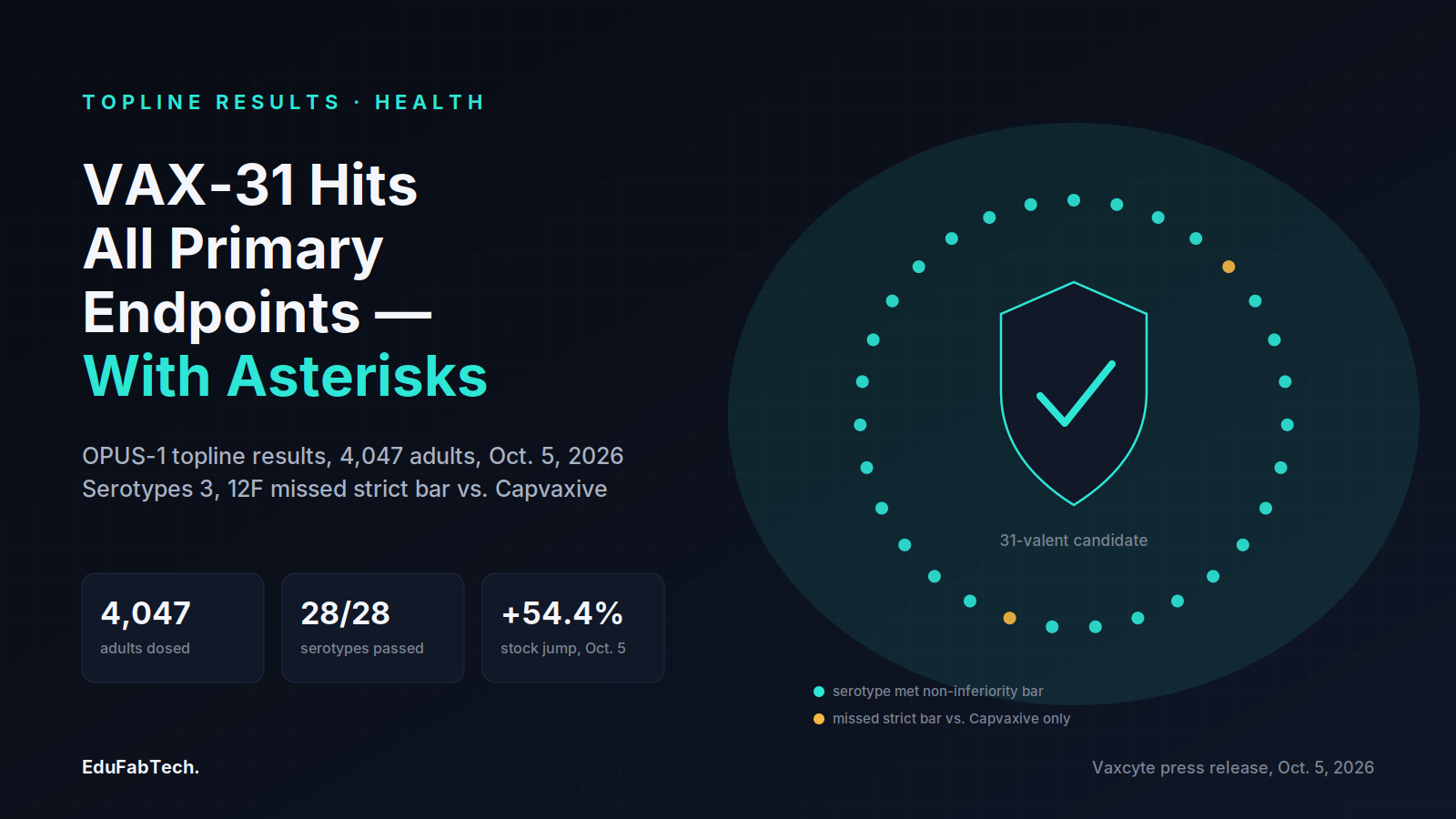
Vaxcyte reported topline results on October 5, 2026, from OPUS-1, the pivotal adult Phase 3 trial of VAX-31, its 31-valent pneumococcal conjugate vaccine candidate, according to a press release filed with the US Securities and Exchange Commission. The trial compared VAX-31 against two vaccines already on the market, Pfizer's Prevnar 20 and Merck's Capvaxive, in 4,047 adults dosed at roughly 30 US sites.
The company says VAX-31 met all of its prespecified primary endpoints. But the release is topline data: a company summary issued ahead of full results, peer review or an FDA filing, not a published study.
What the Trial Measured
OPUS-1 is a randomized, double-blind, active-controlled study. It enrolled 3,572 pneumococcal-vaccine-naïve adults aged 50 and older, split evenly between VAX-31, Prevnar 20 (PCV20) and Capvaxive (PCV21), plus a separate cohort of 475 adults aged 18-49 who received VAX-31 or Prevnar 20 in a 3:1 ratio, according to Vaxcyte's press release.
The trial did not measure whether vaccinated adults actually avoided pneumonia or invasive disease. Like other pneumococcal vaccine trials used for licensing, it measured opsonophagocytic activity (OPA), a blood-antibody function linked to protection, and compared geometric mean titer ratios between VAX-31 and each comparator for every shared serotype. Vaxcyte set non-inferiority as a lower bound of the 95% confidence interval above 0.667 for that ratio, and superiority as a lower bound above 2.0, according to the company's release.
Where VAX-31 Matched Its Rivals, and Where It Fell Short
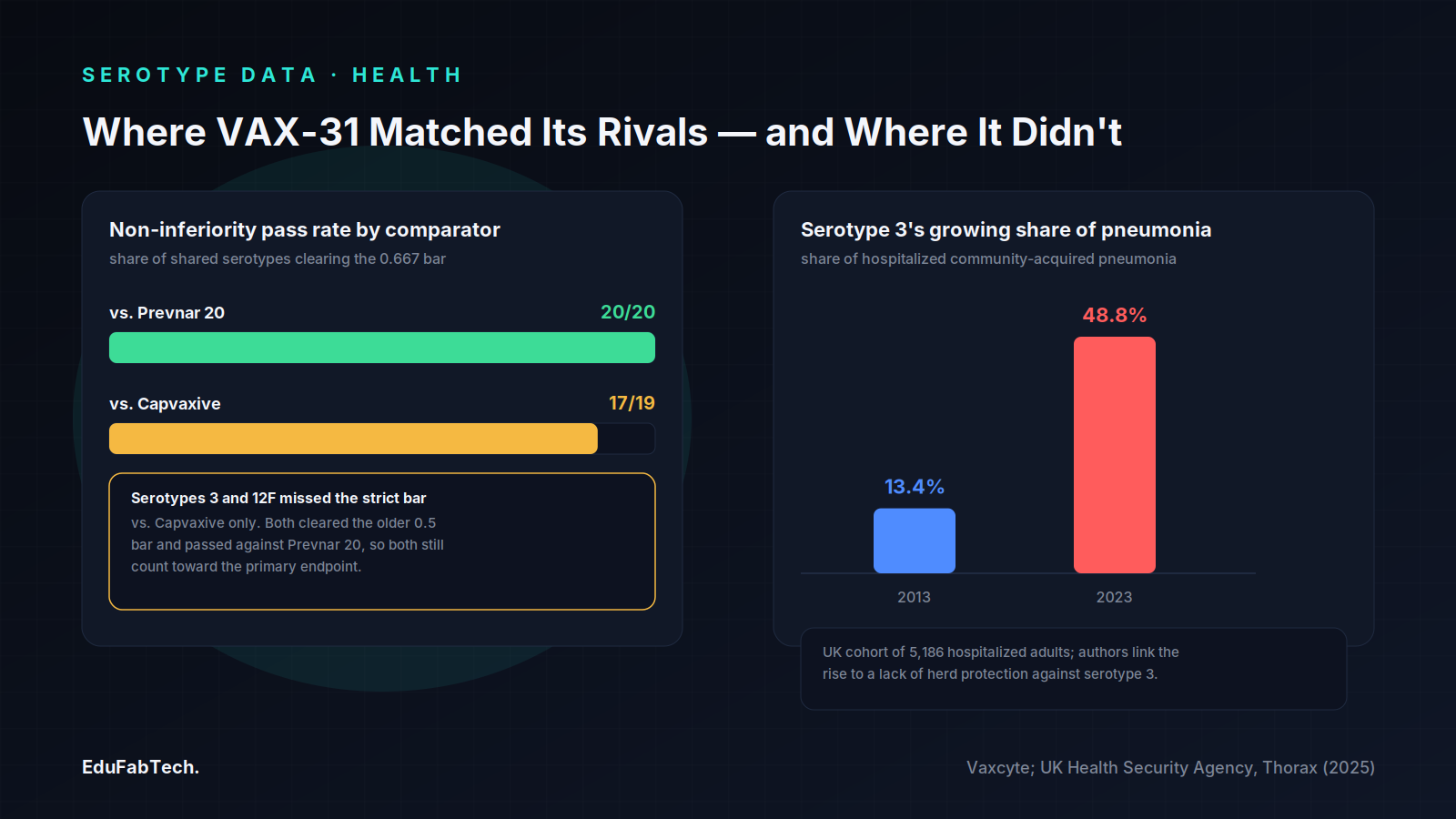
VAX-31 shares 11 serotypes with both Prevnar 20 and Capvaxive, 9 more with Prevnar 20 alone, and 8 more with Capvaxive alone, for 28 shared serotypes in total. Vaxcyte's release states that all 28 met the 0.667 non-inferiority bar against at least one comparator: 20 of 20 comparisons against Prevnar 20 passed, and 17 of 19 against Capvaxive passed. On the three serotypes unique to VAX-31, plus one serotype that cross-reacts with Capvaxive's serotype 20B, the vaccine cleared the stricter superiority bar, giving it a pass on all 32 serotype comparisons overall, by Vaxcyte's own account.
Two serotypes, 3 and 12F, missed the 0.667 threshold against Capvaxive specifically, though both cleared an older, less strict benchmark of 0.5 used in earlier pneumococcal vaccine approvals, and both met the stricter bar against Prevnar 20. Because OPUS-1's non-inferiority criterion required matching only one of the two comparators per shared serotype, Vaxcyte counts these two serotypes, like the other 26, as having met the trial's primary endpoint. Vaxcyte's shares opened 54.4% higher on October 5 than their October 2 close, according to Clinical Trials Arena, which reported that Leerink analysts called the data "highly impressive."
Why Serotype 3 Draws Scrutiny
Serotype 3 performance matters because it has become the dominant cause of pneumococcal pneumonia in some settings despite decades of infant vaccination programs. A UK Health Security Agency cohort study of 5,186 adults hospitalized with community-acquired pneumonia found the share attributable to serotype 3 rose from 13.4% in 2013 to 48.8% in 2023, a pattern the authors, writing in Thorax (2025), attribute to a lack of herd protection against that serotype specifically.
Safety, and What the Release Leaves Out
Vaxcyte describes VAX-31 as "well tolerated," with a safety profile "similar to PCV20 and PCV21 across all ages studied." Reactions at the injection site and systemic symptoms in the week after dosing were mostly mild to moderate and resolved within 48 hours, and the company reports no serious adverse events tied to any of the three vaccines. The release does not include arm-by-arm reaction rates, grading, or discontinuation counts; that level of detail typically appears later, in a peer-reviewed paper or at a scientific meeting.
What Happens Next
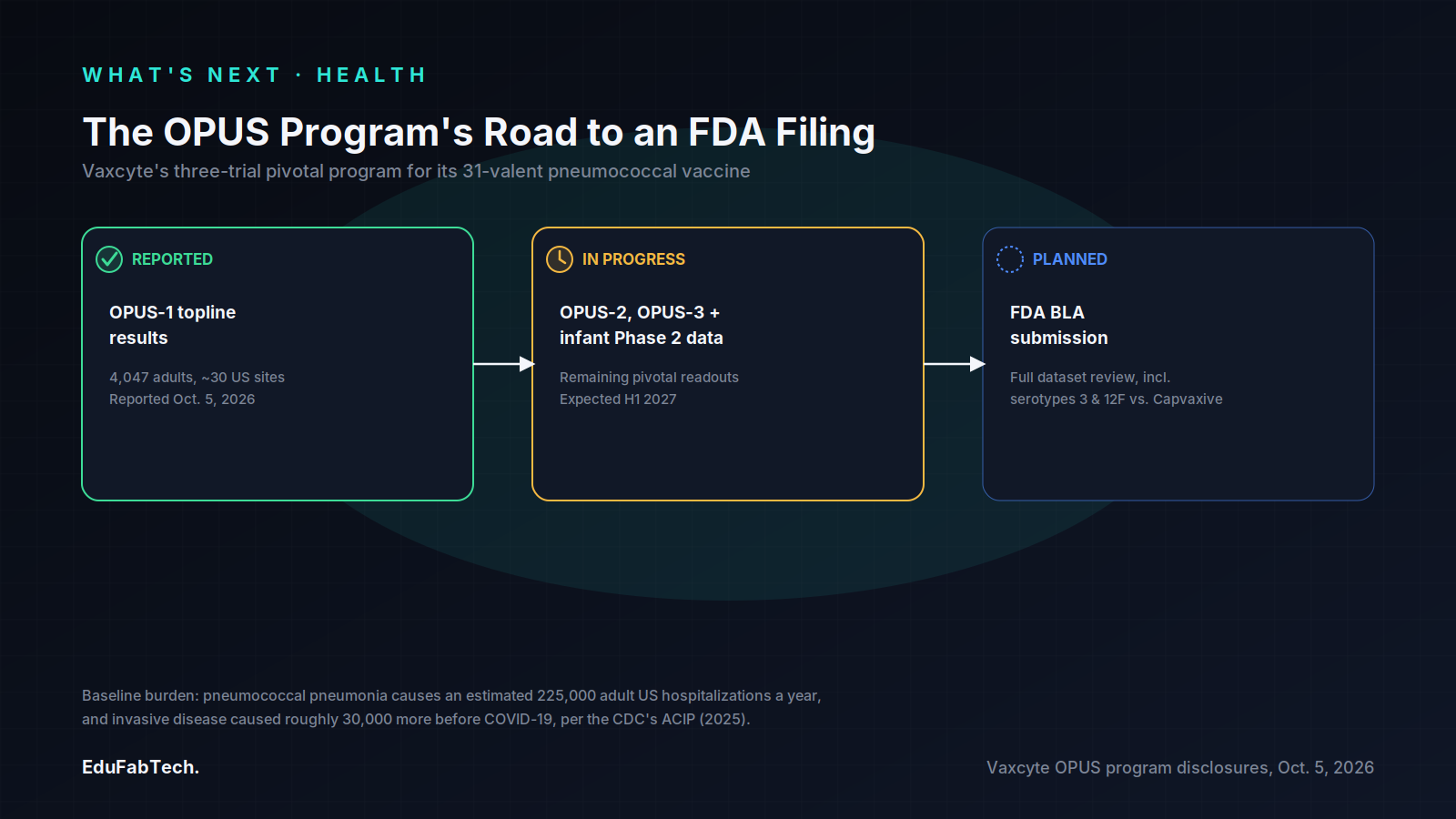
OPUS-1 is one of three pivotal adult Phase 3 trials in Vaxcyte's OPUS program. The company expects results from OPUS-2 and OPUS-3, along with Phase 2 data in infants, by the first half of 2027, and plans to submit a Biologics License Application to the US Food and Drug Administration in the first half of 2028, per the press release. Regulators will still need to review the full dataset, including how the serotype 3 and 12F results are weighed against Capvaxive, before any approval decision.
For researchers and clinicians, the relevant baseline is the disease VAX-31 is meant to prevent: pneumococcal pneumonia causes an estimated 225,000 adult hospitalizations a year in the United States, and invasive pneumococcal disease caused roughly 30,000 more before the COVID-19 pandemic, according to the CDC's Advisory Committee on Immunization Practices (2025). Whether a broader-coverage vaccine with mixed non-inferiority results translates into fewer of those hospitalizations is a question the OPUS program's later trials, not this topline readout, will need to answer.
A quick question for readers
Which study habit do you think is most overrated?
Some popular habits have little evidence behind them. Which one do you think gets too much credit?
Pick an answer, create a free account in a minute, and your vote counts. Already a member? Sign in
Comments 0
CommentNo comments yet. Members start the conversation.
Source: Vaxcyte, Inc.
Sources (3)
- Vaxcyte, Inc.. Vaxcyte Reports Positive Topline Data from OPUS-1, the Pivotal Adult Phase 3 Trial of VAX-31. Vaxcyte, Inc. (SEC Form 8-K Exhibit 99.1), 2026. sec.gov ↗ · checked 10 Oct 2026
- Lansbury L, Mckeever TM, Lawrence H, et al.. Pneumococcal pneumonia trends in adults hospitalised with community-acquired pneumonia over 10 years (2013-2023) and the role of serotype 3. Thorax, 2025. pubmed.ncbi.nlm.nih.gov ↗ · checked 10 Oct 2026
- Advisory Committee on Immunization Practices. Expanded Recommendations for Use of Pneumococcal Conjugate Vaccines Among Adults Aged ≥50 Years. MMWR / CDC, 2025. cdc.gov ↗ · checked 10 Oct 2026