Wales to Raise Tuition Fee Cap to £10,050 for 2027/28, Matching England's Rise
A written statement on 19 November 2026 ties Welsh fees to England's cap, as Northern Ireland and Scotland keep separate, lower charges for their own students.

The Welsh Government confirmed on 19 November 2026 that the tuition fee cap for higher education students in Wales will rise to £10,050 in the 2027/28 academic year, up from £9,790 in 2026/27. The change was set out in a written statement from Cefin Campbell MS, Deputy Minister for Skills and Tertiary Education, and is subject to the usual Welsh Government regulatory process, meaning it must be approved by the Senedd.
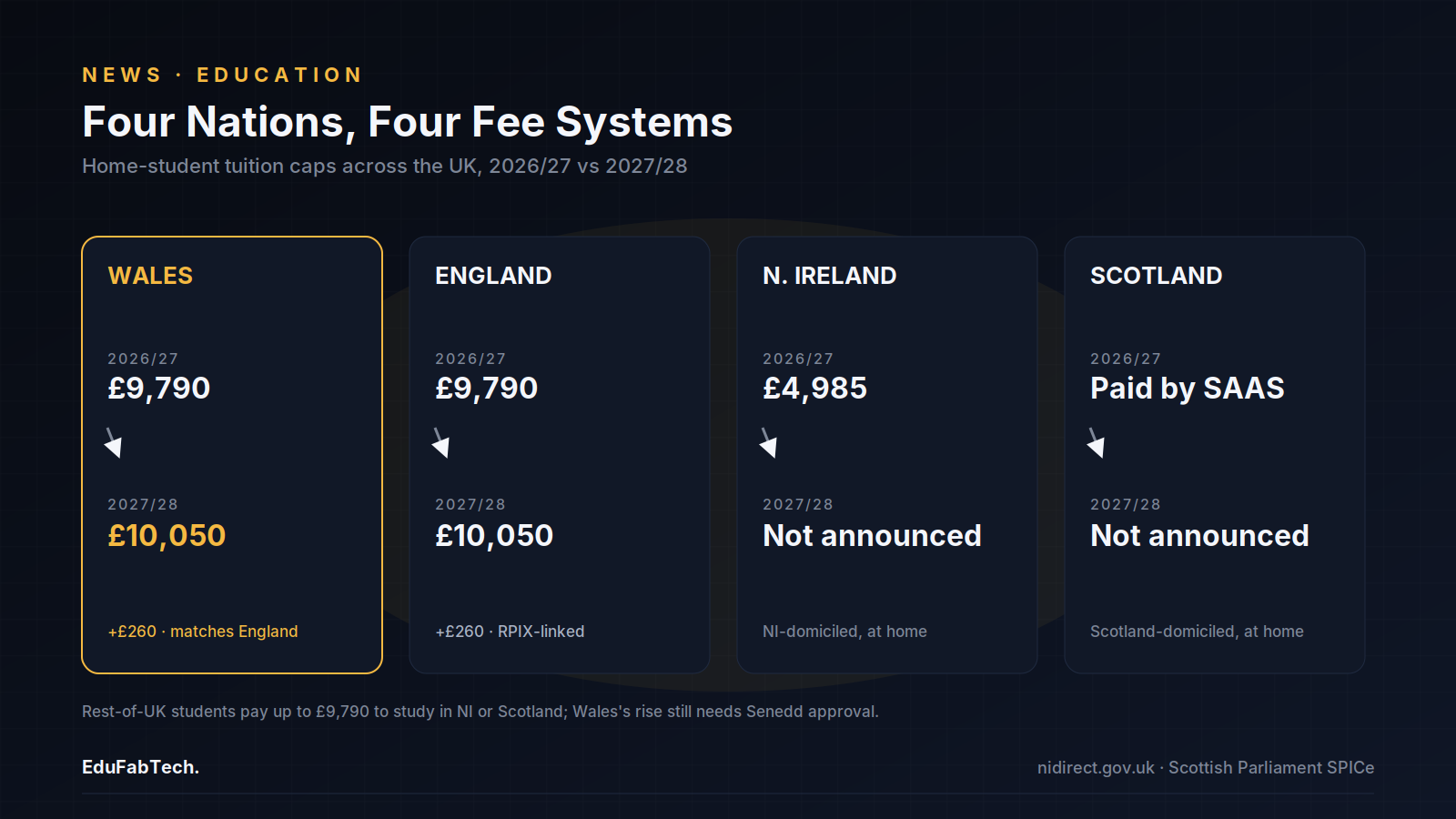
The £260 rise mirrors the increase already set for England, where the maximum tuition fee for a standard full-time undergraduate course also moves from £9,790 in 2026/27 to £10,050 in 2027/28, according to the UK government's final-stage impact assessment on tuition fee limits and fee loans, which ties the increases to forecast RPIX inflation. The Welsh statement notes that aligning the two caps avoids a widening gap between fees charged on either side of the England-Wales border.
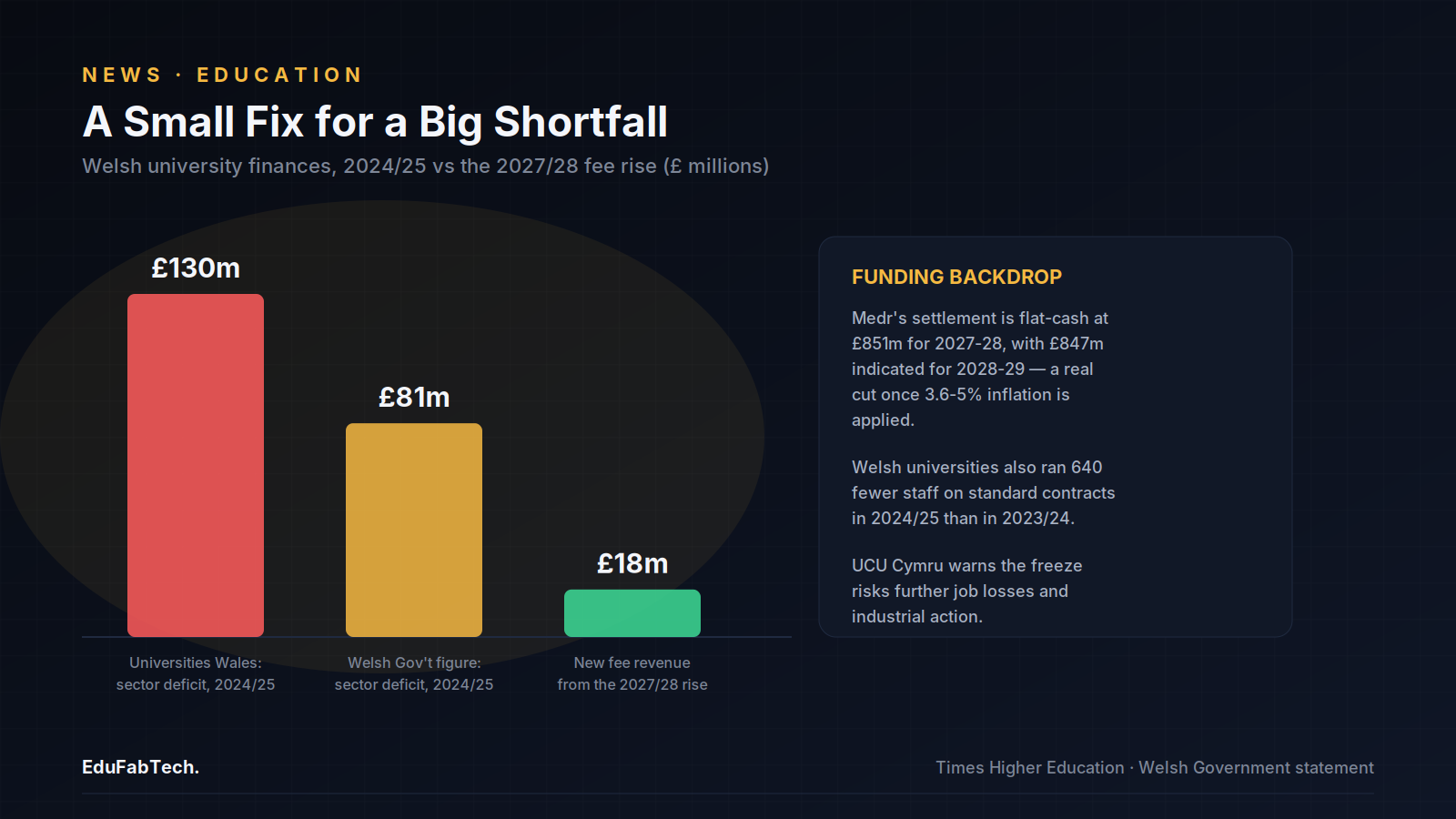
Alongside the headline cap, the Welsh Government is raising the maximum part-time tuition fee loan by 1.8%, or £55, for 2027/28, and estimates the fee increase will bring an additional £18 million in tuition fee revenue to higher education providers in Wales, according to the same statement.
Why Cardiff moved now
The Welsh Government's statement points to sustained financial strain on the sector, citing a collective operating deficit of £81 million across Welsh universities in 2024/25 and 640 fewer staff on standard contracts that year than in 2023/24. Minister Campbell said he "must balance the impact on students with the need to sustain quality higher education in Wales at a time of deep-seated financial pressures," as quoted by Times Higher Education.
That same report says Medr, the body that funds tertiary education in Wales, received a flat-cash settlement of £851 million for 2027-28, matching current levels, with £847 million indicated for 2028-29 — a real-terms cut once inflation, forecast at 3.6% to 5%, is taken into account. Universities Wales told Times Higher Education its members faced "the most challenging financial circumstances in living memory," reporting a collective deficit of more than £130 million for 2024-25. UCU Cymru, which had sought an extra £45 million for the sector, warned the funding freeze risked "further job losses" and "industrial action."
Four different fee systems in one country
The increase leaves the United Kingdom with four separate tuition arrangements. In Northern Ireland, the fee cap for Northern Ireland-domiciled students studying at NI universities is £4,985 for 2026-2027; the same official guidance states that Northern Ireland-domiciled students who study elsewhere in the UK can be charged up to £9,790, according to nidirect.gov.uk. In Scotland, eligible Scotland-domiciled students have their fees paid by the Student Awards Agency for Scotland rather than billed directly, while students from the rest of the UK face a maximum fee of £9,790 for 2026-27, the Scottish Parliament's research service, SPICe, states.
| Nation | Home-student fee cap, 2026/27 | Confirmed cap, 2027/28 |
|---|---|---|
| Wales | £9,790 | £10,050 |
| England | £9,790 | £10,050 |
| Northern Ireland (NI-domiciled) | £4,985 | Not yet announced |
| Scotland (Scotland-domiciled) | Paid by SAAS, no fee billed | Not yet announced |
What it means for students and institutions
For students starting courses in Wales or England in 2027/28, the higher cap raises the ceiling on what a provider can charge and, correspondingly, the maximum tuition fee loan available to cover it — the Welsh statement and the UK impact assessment both tie fee limits directly to loan limits, so most eligible full-time undergraduates will not need to pay the increase upfront. Students domiciled in Northern Ireland or Scotland who study at home are insulated from this particular rise, since their fee levels are set separately by their own administrations rather than following the England-Wales inflation link.
For universities, the Welsh Government frames the additional £18 million as partial relief against a funding settlement it describes as flat in cash terms, not a solution to the deficits Universities Wales has reported. Academics and staff unions in Wales, through UCU Cymru, have signalled that the gap between the funding settlement and the sector's cost pressures remains open, raising the prospect of further disputes over jobs and pay as Welsh institutions set budgets against the new cap.
The increase still needs Senedd approval before it takes effect, and the Welsh Government's statement does not set out what happens to the cap beyond 2027/28, leaving open whether future rises will continue to track England's fee limits or diverge again.
A quick question for readers
Would you choose the same field of study again?
One of the most honest questions a student can answer — and one of the most useful for those still choosing.
Pick an answer, create a free account in a minute, and your vote counts. Already a member? Sign in
Comments 3
Comment-
The number that actually tells the story here is £851 million flat cash against inflation forecast at 3.6 to 5%. That's a real-terms cut dre…
-
The number I'd want the follow-up on is the £81 million deficit versus the £18 million the fee rise is supposed to generate. That's covering…
-
The bit I'd want students to actually dig into is the Medr settlement: £851m flat cash for 2027-28 sounds like holding steady until you line…
Join free to read the full comments and reply Comments are between members; an account takes a minute.
Source: Welsh Government
Sources (3)
- Cefin Campbell MS. Written Statement: Tuition fee limits for higher education students for the 2027/28 academic year. Welsh Government, 2026. gov.wales ↗ · checked 22 Nov 2026
- Times Higher Education. Wales to raise tuition fees after Medr's budget frozen. Times Higher Education, 2026. timeshighereducation.com ↗ · checked 22 Nov 2026
- nidirect. Tuition fees. Department for the Economy, Northern Ireland (nidirect), 2026. nidirect.gov.uk ↗ · checked 22 Nov 2026