Continuous Glucose Monitors Cut A1c by an Extra 0.9 Points in Type 2 Diabetes Without Insulin
A 283-person US trial published in NEJM on 14 October 2026 found adults with type 2 diabetes who don't use insulin spent five more hours a day in target glucose range when given a CGM.
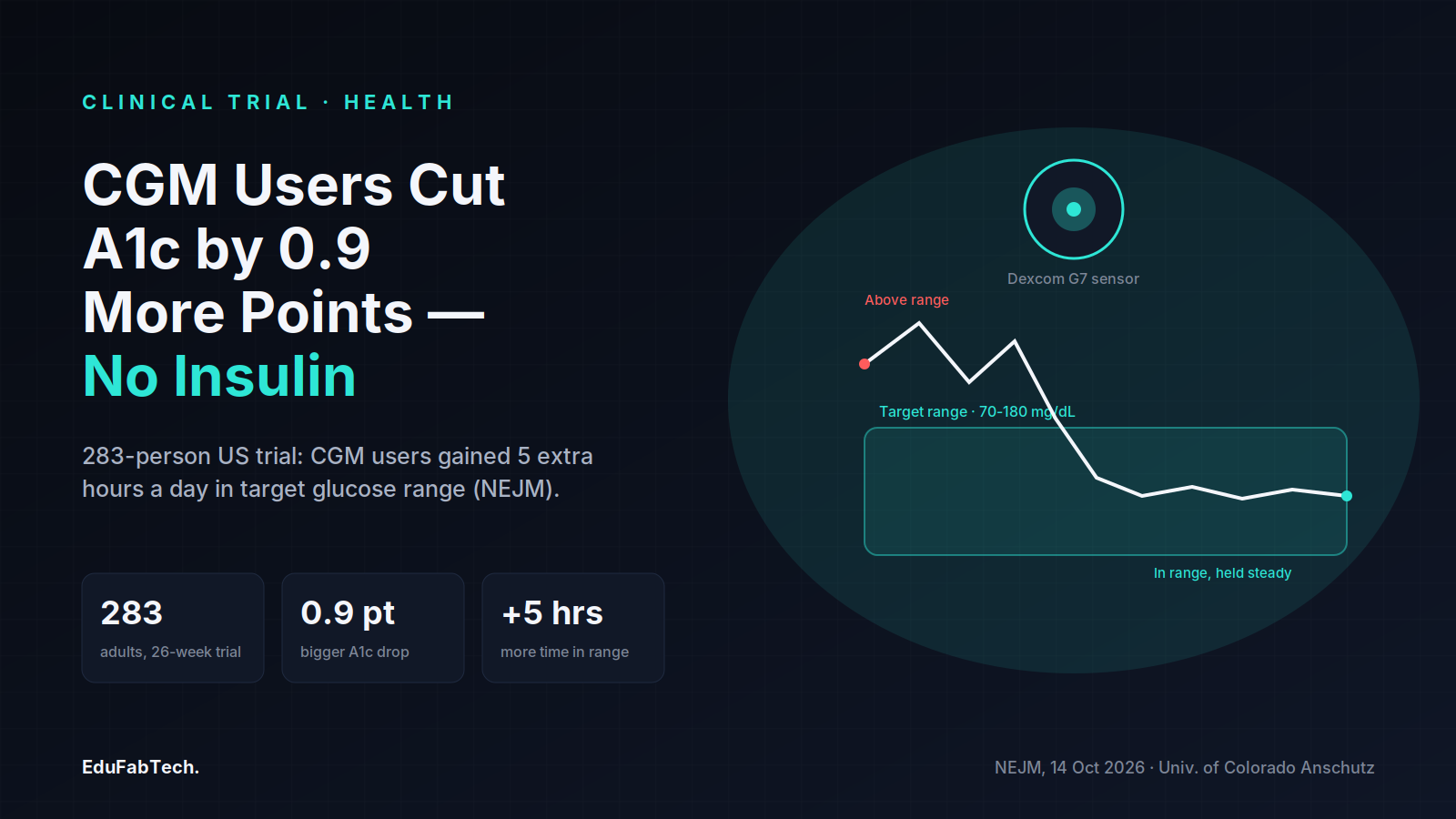
A randomized trial of 283 adults with type 2 diabetes who do not take insulin found that wearing a continuous glucose monitor for 26 weeks lowered blood sugar more than routine care alone, according to a study published in the New England Journal of Medicine on 14 October 2026. The trial, called CONNECT, enrolled participants at 22 primary care practices across the United States and was led by Tamara K. Oser, a professor of family medicine at the University of Colorado Anschutz Medical Campus, according to a University of Colorado Anschutz announcement distributed through EurekAlert.
What the trial measured
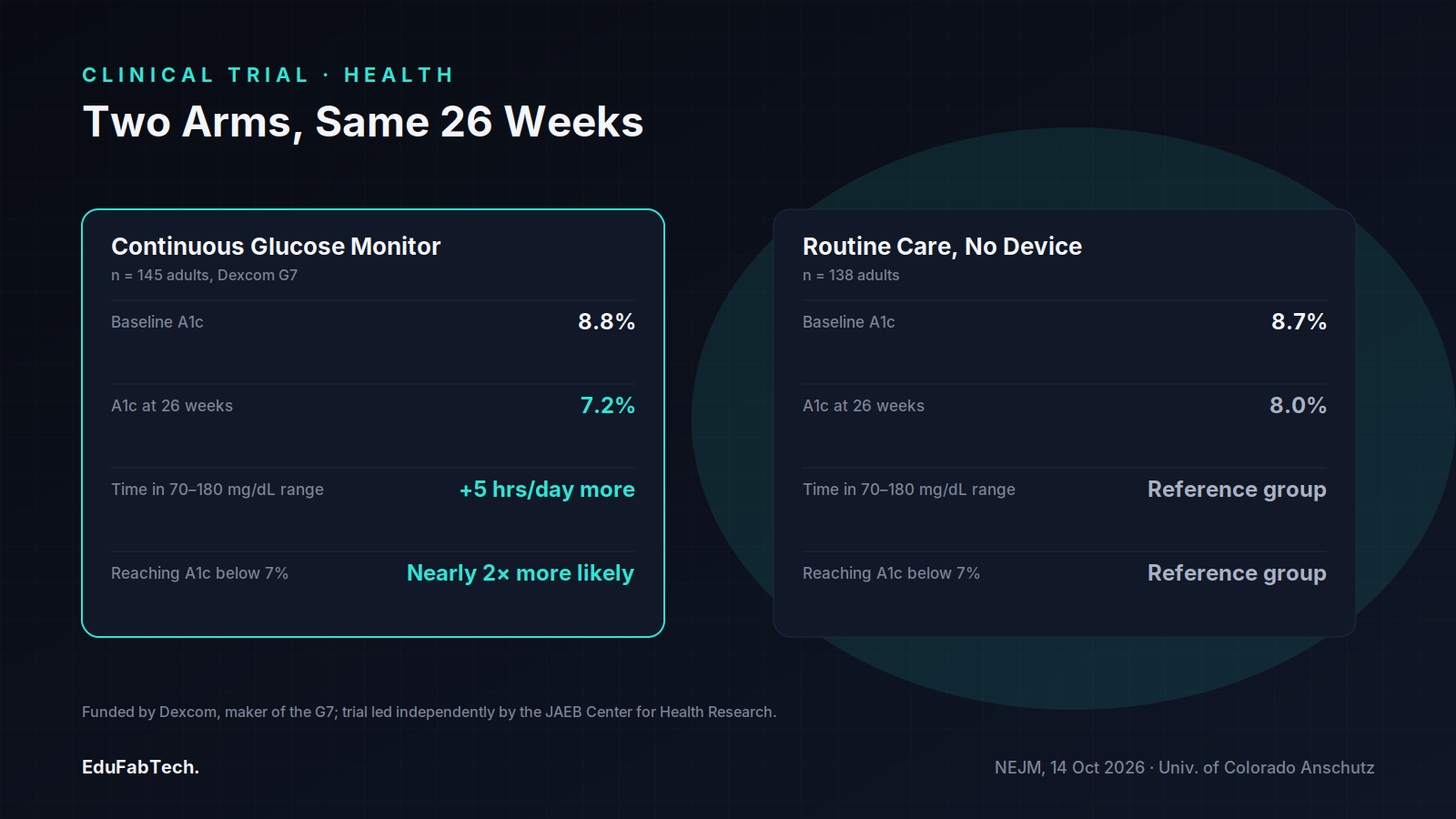
Participants were randomly assigned to use a Dexcom G7 continuous glucose monitor (145 people) or to continue routine care without one (138 people), reaching a total of 283 people followed for 26 weeks, according to the NEJM paper. The trial recorded glycated hemoglobin, known as A1c, a blood marker that reflects average blood sugar over roughly three months, along with how many hours per day each participant's glucose stayed within a target range of 70 to 180 milligrams per deciliter.
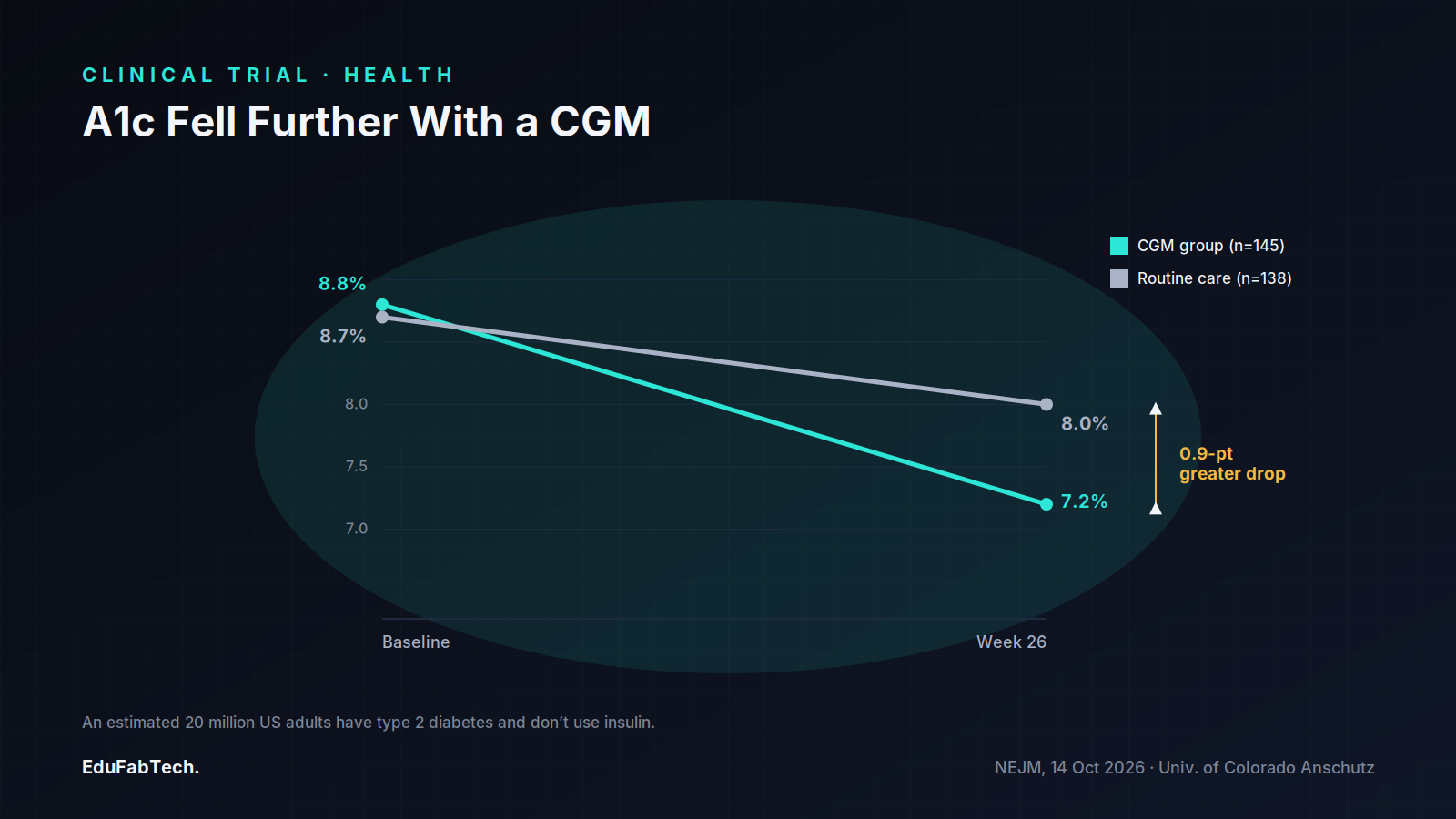
At the start of the trial, average A1c was similar in both groups: 8.8% in the monitor group and 8.7% in the routine-care group, the NEJM paper reports. By 26 weeks, A1c had fallen to 7.2% in the monitor group and to 8.0% in the routine-care group, a difference the paper attributes to use of the device rather than to any other change in treatment.
Time in range and who benefited
Beyond the A1c numbers, people using the monitor spent about five more hours per day with their glucose inside the 70-180 mg/dL target range than people on routine care, according to the University of Colorado Anschutz release. Nearly twice as many monitor users reached an A1c below 7%, a common treatment goal, compared with the routine-care group, the same release states.
Oser, who also directs the Primary Care Diabetes Lab at CU Anschutz, said in the release that "an estimated 20 million adults in the United States have type 2 diabetes and do not take insulin, and despite advances in treatment, many still do not reach glycemic targets." The release reports that the benefit held across a wide range of participants, including differences in age, sex, race, ethnicity, body mass index, how long someone had had diabetes, income, education, insurance status and which other glucose-lowering medicines they were taking, according to Dexcom's statement on the published study.
Funding and who ran it
The trial was funded by Dexcom, the company that makes the G7 monitor used in the study, according to reporting on the paper by MedTech Dive. The trial's senior author, Roy W. Beck, is the medical director of the JAEB Center for Health Research, not a Dexcom employee. Beck is quoted by MedTech Dive saying "the consistency of benefit across a broad range of people and treatment regimens supports consideration of the use of a CGM much earlier in Type 2 diabetes management before insulin is needed."
Dexcom's chief executive, Jake Leach, said in the company's statement that "nearly two decades after NEJM last published clinical data on real-time CGM, we now have compelling evidence demonstrating the impact this technology can have for the millions of people with Type 2 diabetes who are not using insulin." Because the device maker funded the trial, readers should weigh that relationship alongside the fact that the trial's senior author is based at the independent JAEB Center for Health Research rather than at Dexcom.
What the trial did not test
The paper's population was limited to adults with type 2 diabetes who were not using insulin and who were being managed in primary care settings in the United States — it does not address people on insulin, people managed by endocrinologists, or people outside the US healthcare system. MedTech Dive reported that Leerink analyst Mike Kratky highlighted that the data showed the greatest benefit for people with the highest baseline A1Cs, meaning the size of the improvement may vary depending on how uncontrolled a person's diabetes was to begin with.
Why it matters for students and researchers
For students studying clinical trial design, CONNECT is a useful case of a device-funded but independently coordinated multicenter trial run in ordinary primary care clinics rather than specialist diabetes centers — the setting where most people with type 2 diabetes are actually treated. For researchers in health policy and diabetes care, the result adds trial-level evidence to a device category, continuous glucose monitoring, that has mostly been validated in people using insulin; whether health systems and insurers extend routine coverage to the much larger population of non-insulin users will depend on exactly this kind of primary care-based evidence.
A quick question for readers
Which study habit do you think is most overrated?
Some popular habits have little evidence behind them. Which one do you think gets too much credit?
Pick an answer, create a free account in a minute, and your vote counts. Already a member? Sign in
Comments 0
CommentNo comments yet. Members start the conversation.
Source: New England Journal of Medicine
Sources (3)
- Tamara K. Oser et al.. Continuous Glucose Monitoring in Non–Insulin-Treated Type 2 Diabetes. New England Journal of Medicine, 2026. nejm.org ↗ · checked 19 Oct 2026
- University of Colorado Anschutz Medical Campus. Continuous Glucose Monitoring in Non-Insulin-Treated Type 2 Diabetes. EurekAlert / University of Colorado Anschutz, 2026. eurekalert.org ↗ · checked 19 Oct 2026
- Dexcom, Inc.. Landmark Dexcom CONNECT Study Published in The New England Journal of Medicine. Dexcom Investor Relations, 2026. investors.dexcom.com ↗ · checked 19 Oct 2026