FDA Approves Klygefa, First Dual-Binding Nanobody Drug for Myasthenia Gravis
The weekly self-injected C5 inhibitor was approved 16 November 2026 for AChR antibody-positive adults, based on a 260-patient Phase 3 trial published in JAMA Neurology.
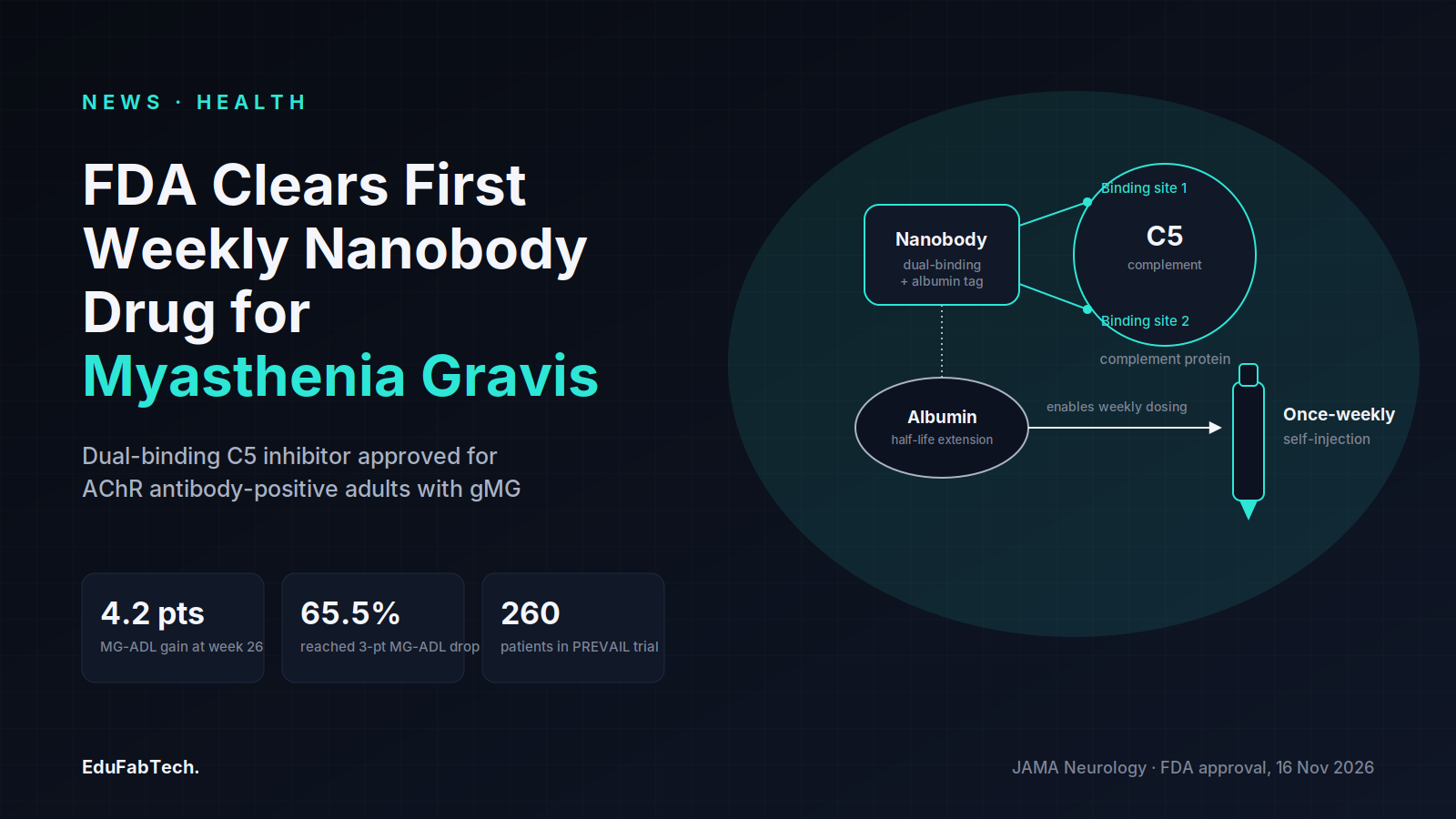
The US Food and Drug Administration approved Klygefa (gefurulimab-gaks) on 16 November 2026 for adults with generalized myasthenia gravis who test positive for acetylcholine receptor (AChR) antibodies, according to a press release from the Muscular Dystrophy Association (2026). The drug, developed by Alexion, AstraZeneca Rare Disease, is described by the MDA as the first and only dual-binding nanobody C5 inhibitor approved for the condition.
A Disease With Few Convenient Options
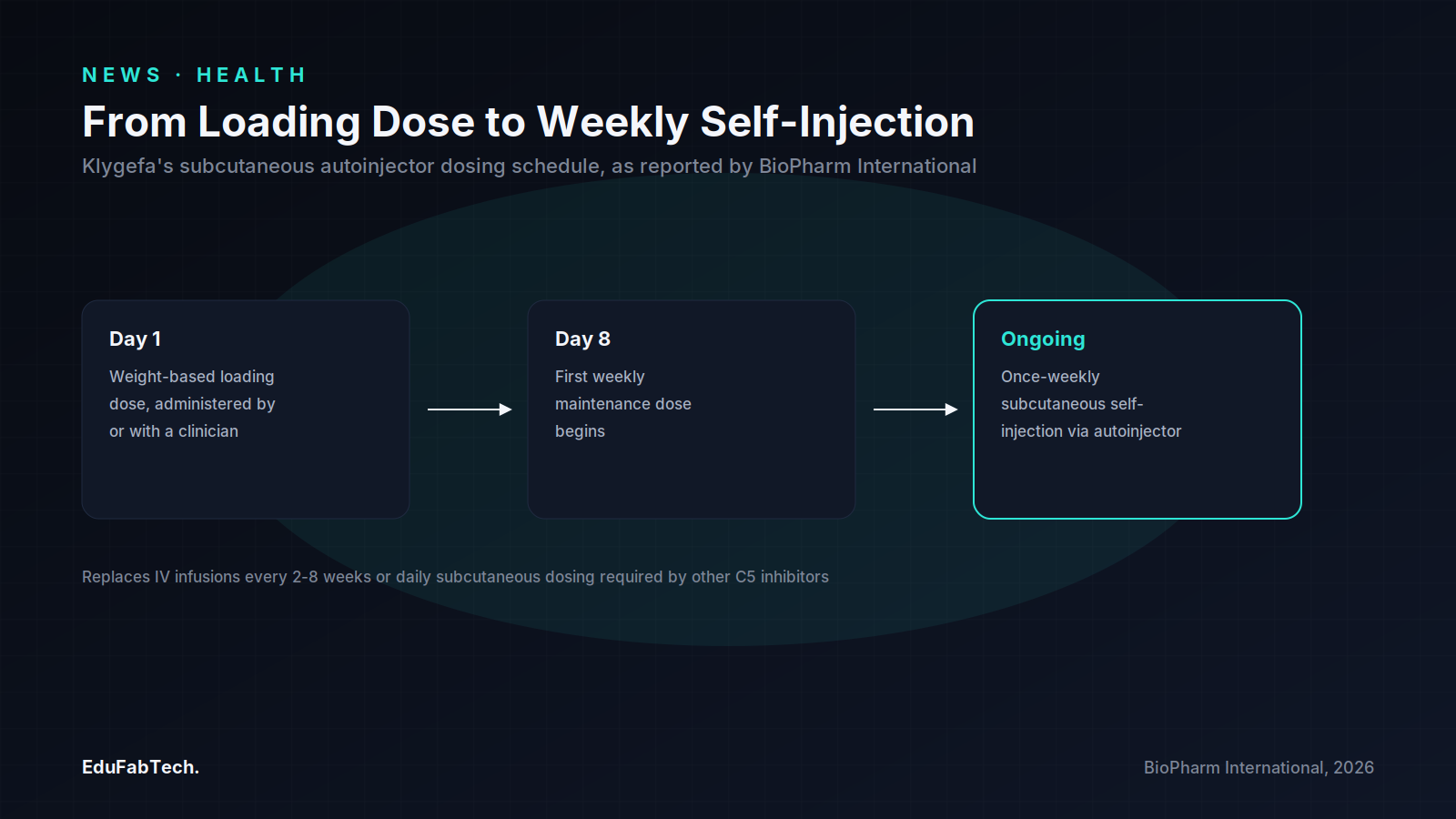
Generalized myasthenia gravis is an autoimmune disorder in which antibodies disrupt signaling at the neuromuscular junction, causing fluctuating muscle weakness that can affect the eyes, limbs, swallowing and breathing. Several complement C5 inhibitors are already approved for AChR antibody-positive patients, but existing options require intravenous infusion every two to eight weeks or, in the case of other subcutaneous drugs, daily dosing, according to the Muscular Dystrophy Association (2026).
Klygefa is designed to change that dosing burden. It binds complement protein C5 at two separate sites and also binds serum albumin, which extends its half-life enough to allow once-weekly subcutaneous self-injection through an autoinjector, with a weight-based loading dose on day one followed by weekly maintenance dosing from day eight, as reported by BioPharm International (2026).
What the PREVAIL Trial Measured
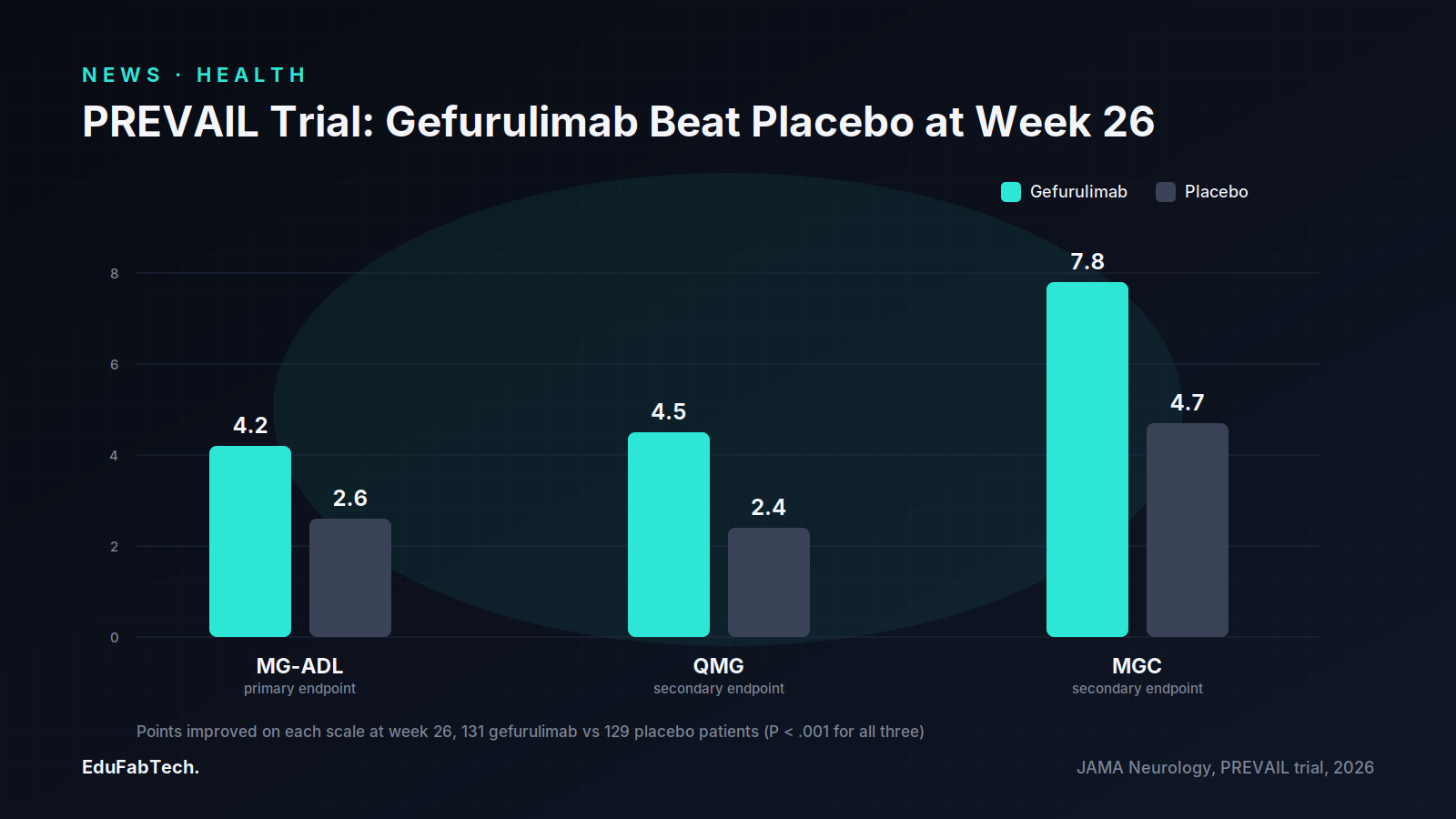
The approval rests on the Phase 3 PREVAIL trial, published in JAMA Neurology by Kelly G. Gwathmey of Virginia Commonwealth University, Francesco Saccà of the University of Naples Federico II, James F. Howard Jr of the University of North Carolina and co-authors (JAMA Neurology, 2026). The randomized, double-blind, placebo-controlled study screened 405 patients at 113 sites in 20 countries and randomized 260 of them, 131 to gefurulimab and 129 to placebo, for a 26-week controlled treatment period followed by an optional open-label extension.
On the primary endpoint, change in Myasthenia Gravis Activities of Daily Living (MG-ADL) score at week 26, gefurulimab recipients improved by 4.2 points (95% CI, −4.7 to −3.6) compared with 2.6 points (95% CI, −3.1 to −2.0) on placebo, a treatment difference of 1.6 points (P < .001), the paper reports. The authors note that a clinically meaningful separation from placebo appeared as early as week one.
Secondary Measures and Safety
On the Quantitative Myasthenia Gravis (QMG) score, a secondary endpoint, gefurulimab improved scores by 4.5 points (95% CI, −5.2 to −3.8) versus 2.4 points (95% CI, −3.1 to −1.7) on placebo, a difference of 2.1 points (P < .001). A five-point or greater QMG reduction was reached by 46.3% of gefurulimab patients versus 25.2% on placebo (odds ratio 2.56, P = .002), and a three-point or greater MG-ADL reduction was reached by 65.5% versus 52.2% (odds ratio 1.74, P = .04). The Myasthenia Gravis Composite score improved by 7.8 points versus 4.7 points (P < .001), according to the trial report in JAMA Neurology (2026).
Adverse events occurred in 75.6% of gefurulimab recipients and 80.6% of placebo recipients, mostly mild to moderate, with injection-site reactions, headache, back pain and nasopharyngitis the most common events tied to treatment. Serious adverse events occurred in 9.2% of the gefurulimab group versus 11.6% of the placebo group, and the authors report no meningococcal infections in either arm, a known risk with C5-targeted drugs. The paper concludes that gefurulimab "demonstrated both early and sustained clinical benefit in AChR-Ab+ gMG and was well tolerated, supporting its potential as a convenient, once-weekly, self-administered treatment regimen," per JAMA Neurology (2026).
What the Approval Means for Patients and Researchers
The Muscular Dystrophy Association's chief research officer, Angela Lek, said in the organisation's statement that "each new therapy brings us closer to more personalized and effective treatment approaches," while MDA ambassador Elizabeth Madole, who lives with myasthenia gravis, said "every new treatment option brings renewed hope and the possibility of finding approaches that work better for more people," according to the Muscular Dystrophy Association (2026).
For researchers studying neuromuscular disease and complement biology, PREVAIL adds a dual-binding, albumin-extended nanobody to the C5-inhibitor class already represented by eculizumab, ravulizumab and zilucoplan, with 26 weeks of randomized controlled data and an ongoing open-label extension still generating longer-term safety and durability evidence, as described in the trial publication in JAMA Neurology (2026).
A quick question for readers
Which study habit do you think is most overrated?
Some popular habits have little evidence behind them. Which one do you think gets too much credit?
Pick an answer, create a free account in a minute, and your vote counts. Already a member? Sign in
Comments 3
Comment-
The number that should get more scrutiny is the MG-ADL responder result: 65.5% of gefurulimab patients hit a 3-point-or-greater improvement…
-
The number that actually matters here is 1.6 points on the MG-ADL, not the headline 4.2-point drop — placebo moved 2.6 points on its own, wh…
-
The number I'd want to see replicated is that 65.5% vs 52.2% MG-ADL responder gap - OR 1.74, P=.04, which is a lot thinner than the headline…
Join free to read the full comments and reply Comments are between members; an account takes a minute.
Source: Muscular Dystrophy Association
Sources (3)
- Kelly G. Gwathmey, Francesco Saccà, James F. Howard Jr, et al.. Efficacy and Safety of Gefurulimab in Generalized Myasthenia Gravis: The PREVAIL Phase 3 Randomized Clinical Trial. JAMA Neurology, 2026. jamanetwork.com ↗ · checked 17 Nov 2026
- Muscular Dystrophy Association. FDA Approves KLYGEFA™ (gefurulimab-gaks), Expanding Treatment Options for Generalized Myasthenia Gravis. Muscular Dystrophy Association, 2026. mda.org ↗ · checked 17 Nov 2026
- BioPharm International Editors. FDA Approves AstraZeneca's Gefurulimab (Klygefa) for Generalized MG. BioPharm International, 2026. biopharminternational.com ↗ · checked 17 Nov 2026