FDA Approves Sunharbo, First Factor XIa Inhibitor, for Secondary Stroke Prevention
On 9 November 2026 the FDA cleared Bayer's asundexian, backed by a 12,327-patient Phase 3 trial showing a 26% drop in recurrent ischemic stroke over a median 14.2 months.
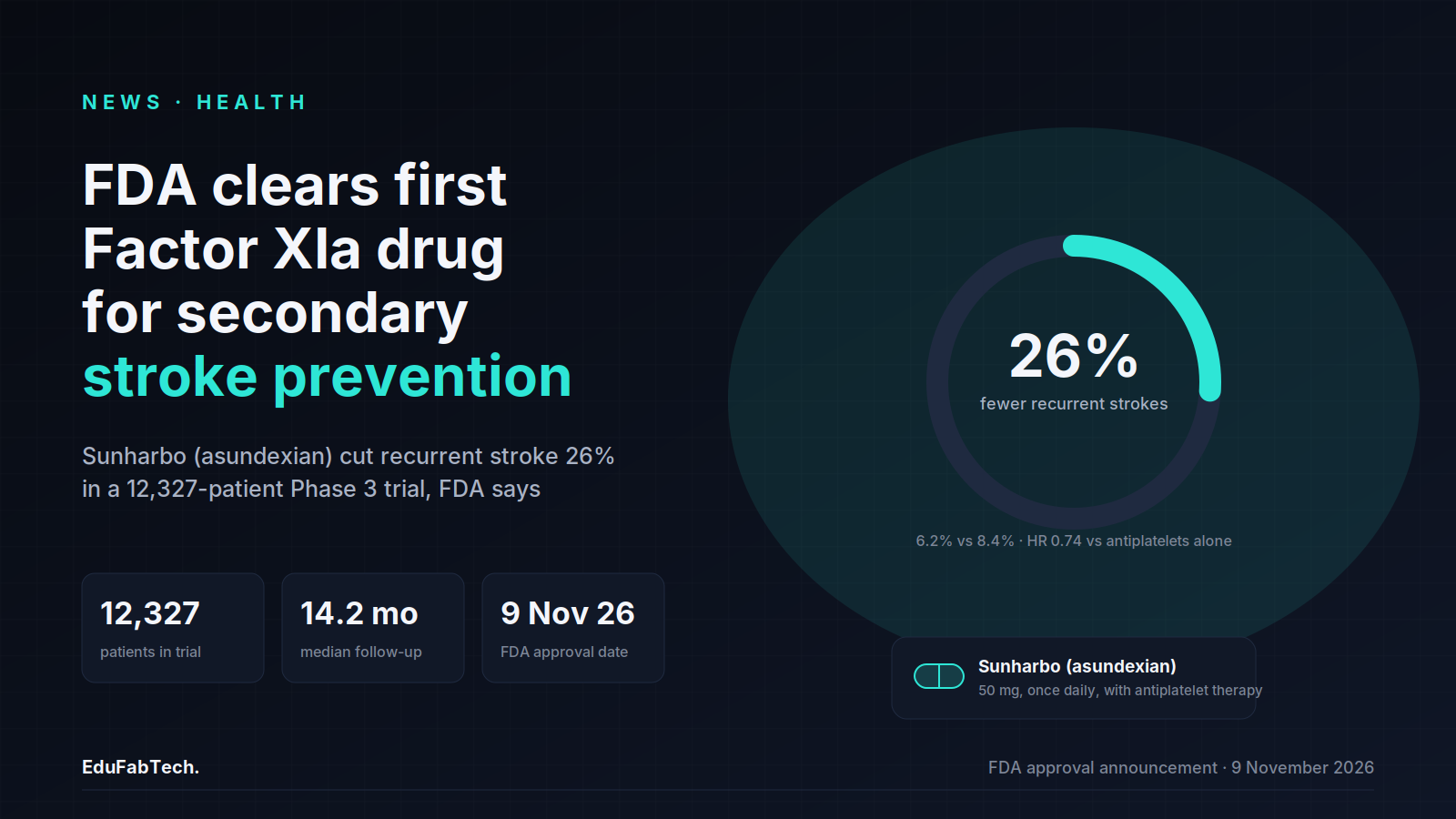
The U.S. Food and Drug Administration approved Sunharbo (asundexian) on 9 November 2026, clearing the first medicine in a new class of blood thinners called Factor XIa inhibitors, according to the agency's press announcement. The 50 mg tablet, taken once daily alongside standard antiplatelet therapy, is approved to reduce the risk of a repeat stroke in adults who have recently had a mild-to-moderate non-cardioembolic ischemic stroke or a high-risk transient ischemic attack. It is not approved for stroke prevention in people with atrial fibrillation. The approval follows China's National Medical Products Administration, which cleared the same drug on 26 October 2026, making asundexian the first Factor XIa inhibitor approved anywhere in the world, as reported by Securities.io.
What the trial measured
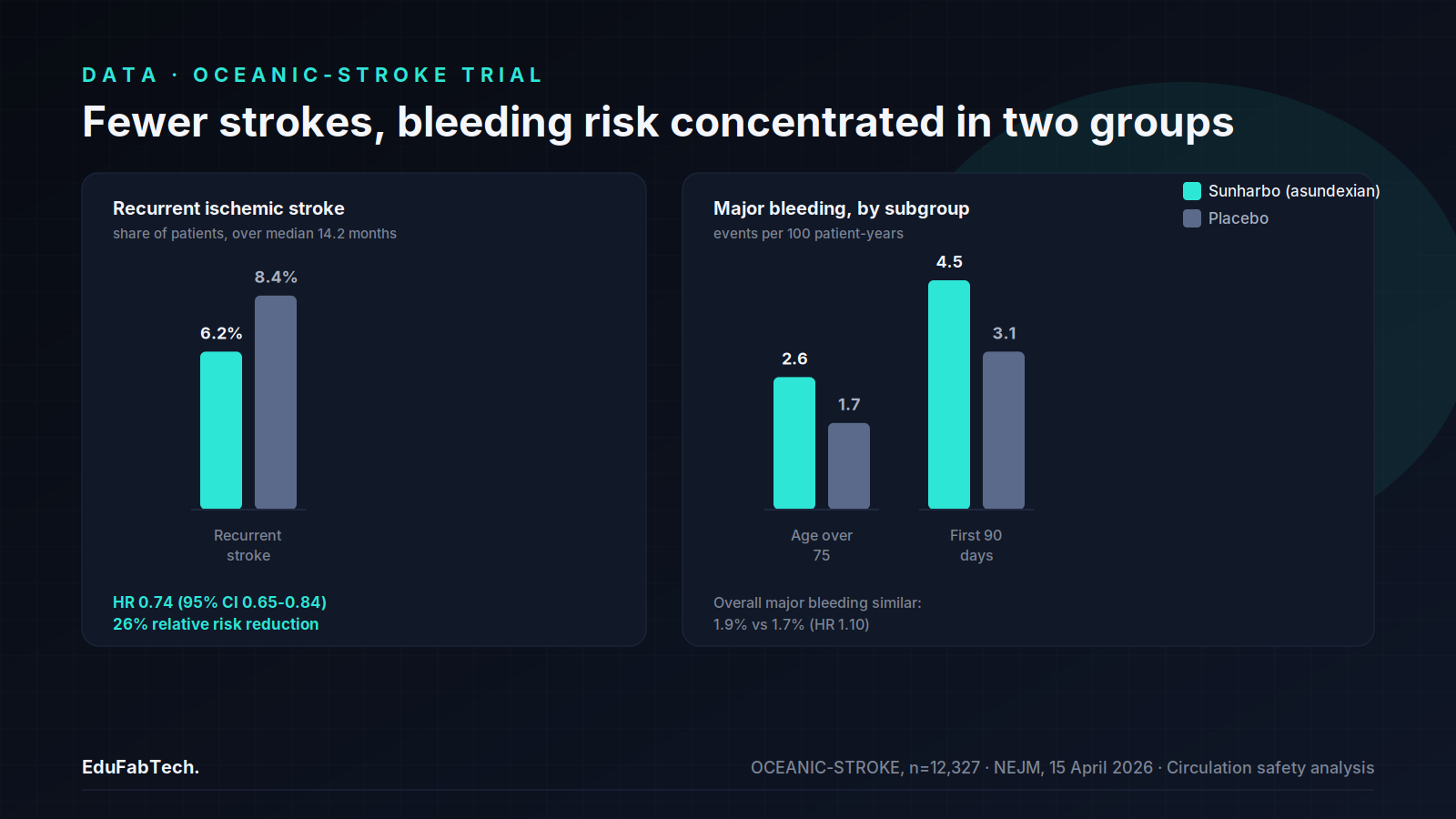
The approval rests on the Phase 3 OCEANIC-STROKE trial, led by Mukul Sharma and published in the New England Journal of Medicine on 15 April 2026. The double-blind trial randomized 12,327 adults, with a mean age of 68 and 33.3% female, within 72 hours of a non-cardioembolic ischemic stroke or high-risk TIA, assigning them to asundexian 50 mg daily or placebo on top of their planned single or dual antiplatelet therapy, according to the Healio summary of the approval. Over a median treatment period of 14.2 months, ischemic stroke occurred in 6.2% of patients on asundexian versus 8.4% on placebo, a hazard ratio of 0.74 (95% CI, 0.65-0.84; P<0.001), according to the published trial results.
What the drug does differently
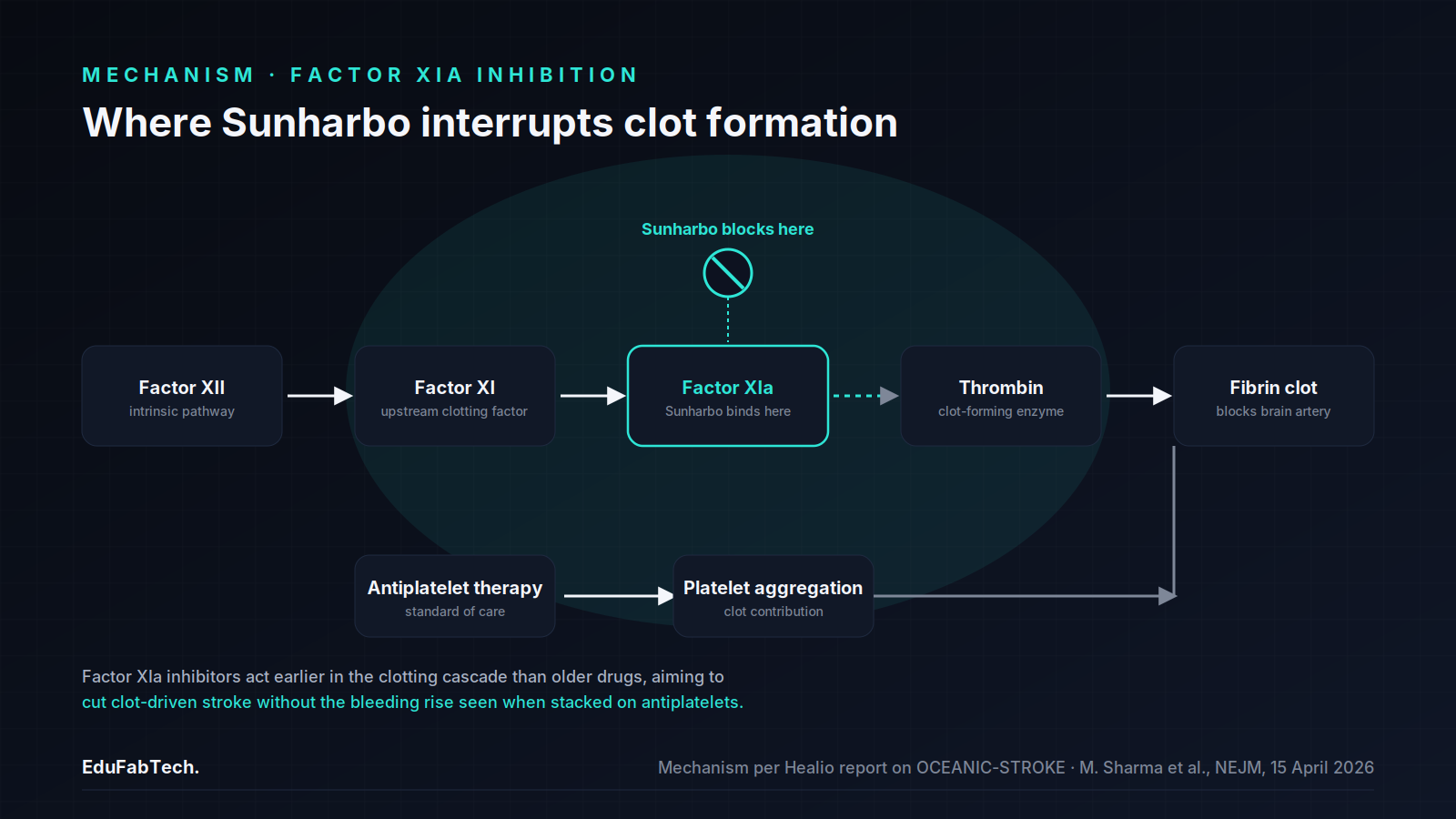
Factor XIa inhibitors work earlier in the blood-clotting cascade than older anticoagulants and antiplatelet drugs, which is the rationale pharmaceutical researchers have pursued for reducing clot-driven strokes without the bleeding increase typically seen when anticoagulants are layered onto antiplatelet therapy. Mukul Sharma, the trial's lead investigator and a senior scientist with the Population Health Research Institute, said of the result: "This reduces recurrent stroke significantly more than antiplatelets alone. The effect begins early and continues as far as we followed patients," according to Healio's report.
Where the bleeding risk shows up
Overall rates of major bleeding were similar between the two groups in the OCEANIC-STROKE trial: 1.9% with asundexian versus 1.7% with placebo (hazard ratio 1.10; 95% CI, 0.85-1.44), according to the trial data cited in the American College of Cardiology's journal scan of the NEJM paper. The FDA's approval announcement flags two subgroups where bleeding was higher on the drug: patients older than 75, and those in the first 90 days of treatment. A companion safety analysis of the trial, published in Circulation, puts numbers to that finding: major bleeding in patients over 75 occurred at 2.6 per 100 patient-years on Sunharbo versus 1.7 per 100 patient-years on placebo, and bleeding in the first 90 days occurred at 4.5 per 100 patient-years versus 3.1 per 100 patient-years on placebo. Gastrointestinal bleeding was likewise more frequent with the drug, at 2.7 versus 2.1 per 100 patient-years, and the same analysis found that 74% of these gastrointestinal bleeding events were classified as clinically relevant non-major or minor.
Key trial numbers
| Measure | Asundexian | Placebo |
|---|---|---|
| Recurrent ischemic stroke | 6.2% | 8.4% |
| Overall major bleeding | 1.9% | 1.7% |
| Major bleeding, age over 75 (per 100 patient-years) | 2.6 | 1.7 |
| Major bleeding, first 90 days (per 100 patient-years) | 4.5 | 3.1 |
What the FDA and the trial lead said
Hylton V. Joffe, director of the FDA's Office of Cardiology, Hematology, Endocrinology, and Nephrology, said in the agency's announcement: "Today's approval represents a meaningful advance for patients and health care providers seeking a new option for secondary stroke prevention." The drug is marketed in the United States by Bayer HealthCare Pharmaceuticals, based in Whippany, New Jersey, per the FDA release.
Why this matters for researchers and clinicians
For students and researchers in pharmacology, cardiology and neurology, Sunharbo's approval gives the field its first regulatory test case for a drug class designed to separate clot prevention from bleeding risk, a target that has occupied anticoagulant research for years. The subgroup findings on age and early-treatment bleeding, flagged in the FDA's own release and detailed further in the Circulation safety analysis, give clinical researchers a concrete starting point for follow-up studies on dosing or monitoring in older patients and in the first three months after a stroke. The OCEANIC-STROKE trial enrolled patients across multiple countries, and the drug has now been approved separately in China, in October 2026, and in the United States, in November 2026, based on the same Phase 3 dataset.
The FDA's approval does not extend to people with atrial fibrillation, and the agency's release does not state whether Bayer is pursuing a separate trial in that population. Readers following secondary stroke prevention research should treat the OCEANIC-STROKE results as specific to the non-cardioembolic stroke and high-risk TIA population the trial enrolled, rather than as evidence for Factor XIa inhibition in stroke prevention generally.
A quick question for readers
Which study habit do you think is most overrated?
Some popular habits have little evidence behind them. Which one do you think gets too much credit?
Pick an answer, create a free account in a minute, and your vote counts. Already a member? Sign in
Comments 3
Comment-
The subgroup numbers are the part worth sitting with, not the headline hazard ratio. Over-75 bleeding is 2.6 vs 1.7 per 100 patient-years an…
-
The overall bleeding number is doing real work to look reassuring: 1.9% vs 1.7%, HR 1.10, CI spanning 0.85 to 1.44 — that's a legitimate 'si…
-
The number that matters more than the headline 26% drop is the overall bleeding line: 1.9% versus 1.7% on placebo, basically a wash, with ha…
Join free to read the full comments and reply Comments are between members; an account takes a minute.
Source: U.S. Food and Drug Administration
Sources (3)
- U.S. Food and Drug Administration. FDA Approves First Factor XIa Inhibitor to Help Prevent Stroke in Certain Adults at High Risk. FDA, 2026. fda.gov ↗ · checked 16 Nov 2026
- Mukul Sharma et al.. Asundexian for Secondary Stroke Prevention (OCEANIC-STROKE). New England Journal of Medicine, 2026. nejm.org ↗ · checked 16 Nov 2026
- Jukka Putaala et al.. Bleeding With Asundexian Versus Placebo in Patients With Noncardioembolic Ischemic Stroke or High-Risk TIA (OCEANIC-STROKE). Circulation, 2026. ahajournals.org ↗ · checked 16 Nov 2026