Phase 3 Trial Finds Semaglutide Cut BMI 13.5% at Week 68 in Children Aged 6 to Under 12
The STEP Young trial, published in NEJM on 16 November 2026, tested weekly semaglutide injections in 167 children with obesity across 48 sites in nine countries.
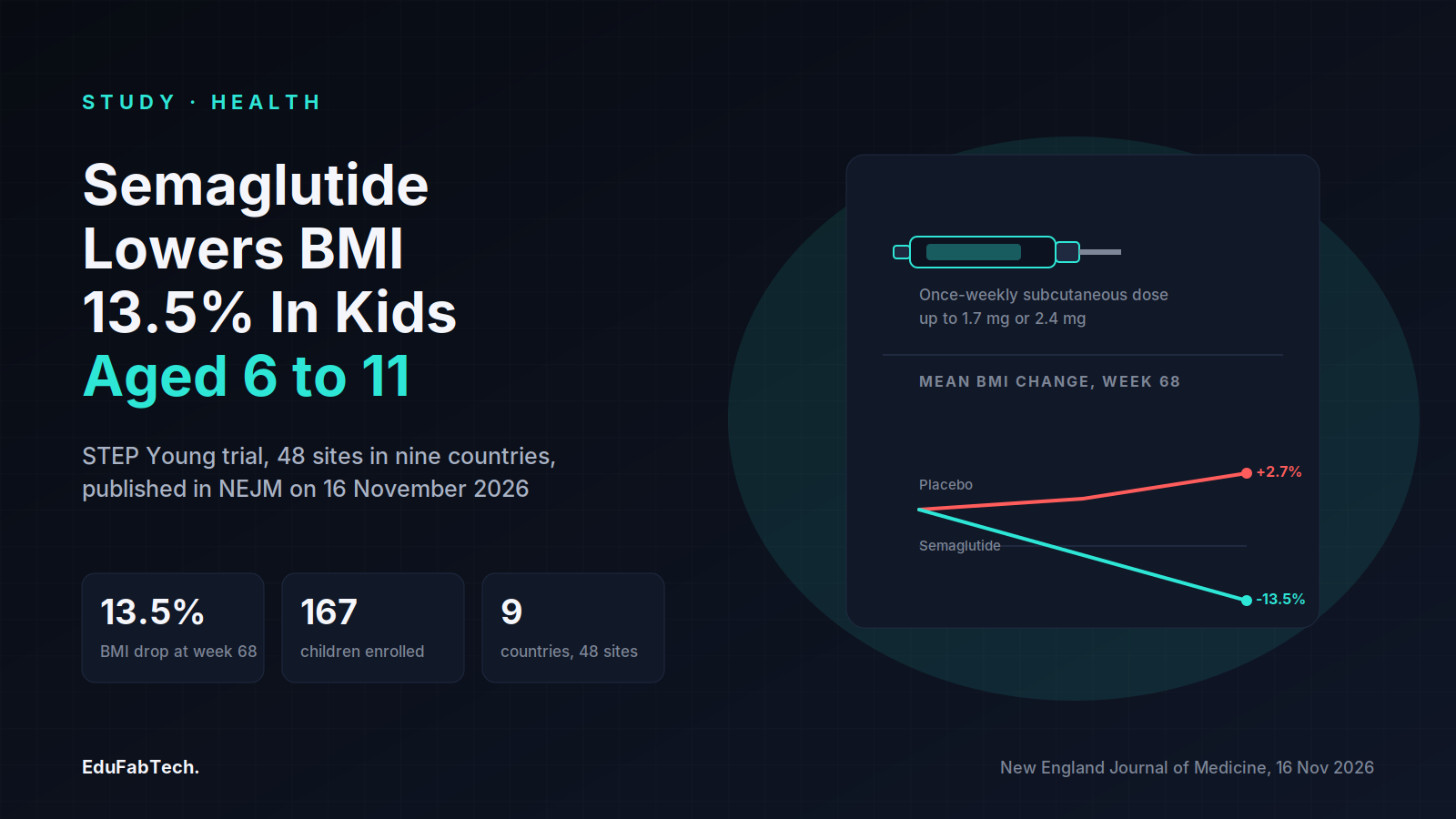
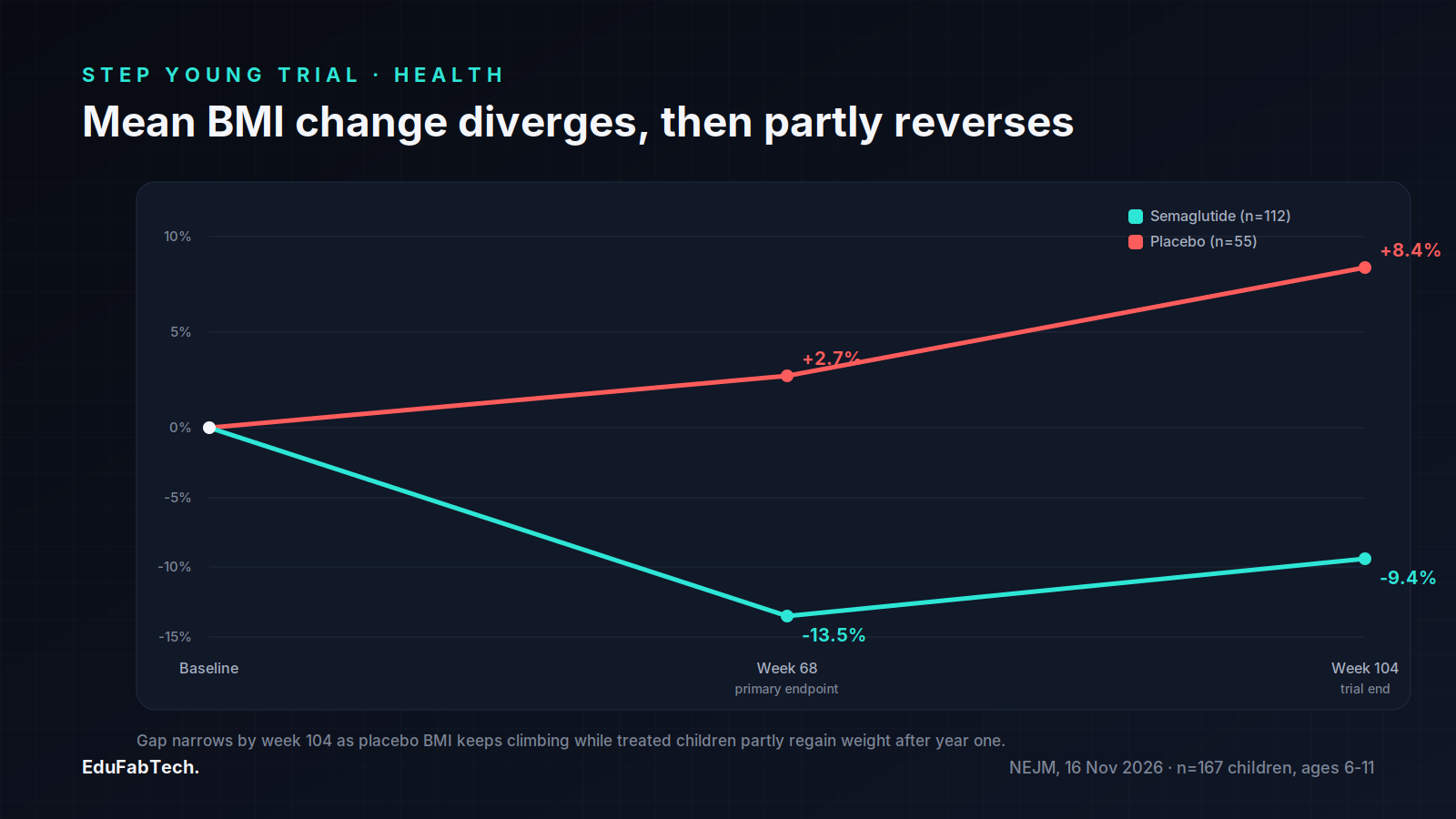
A phase 3 trial of weekly semaglutide injections in children aged 6 to under 12 with obesity found a mean BMI reduction of 13.5% at week 68, compared with a 2.7% increase in the placebo group, according to results published in the New England Journal of Medicine on 16 November 2026. The trial, called STEP Young, was also presented at the Obesity Society's ObesityWeek 2026 meeting in Washington, DC, held 14-17 November.
What the trial measured
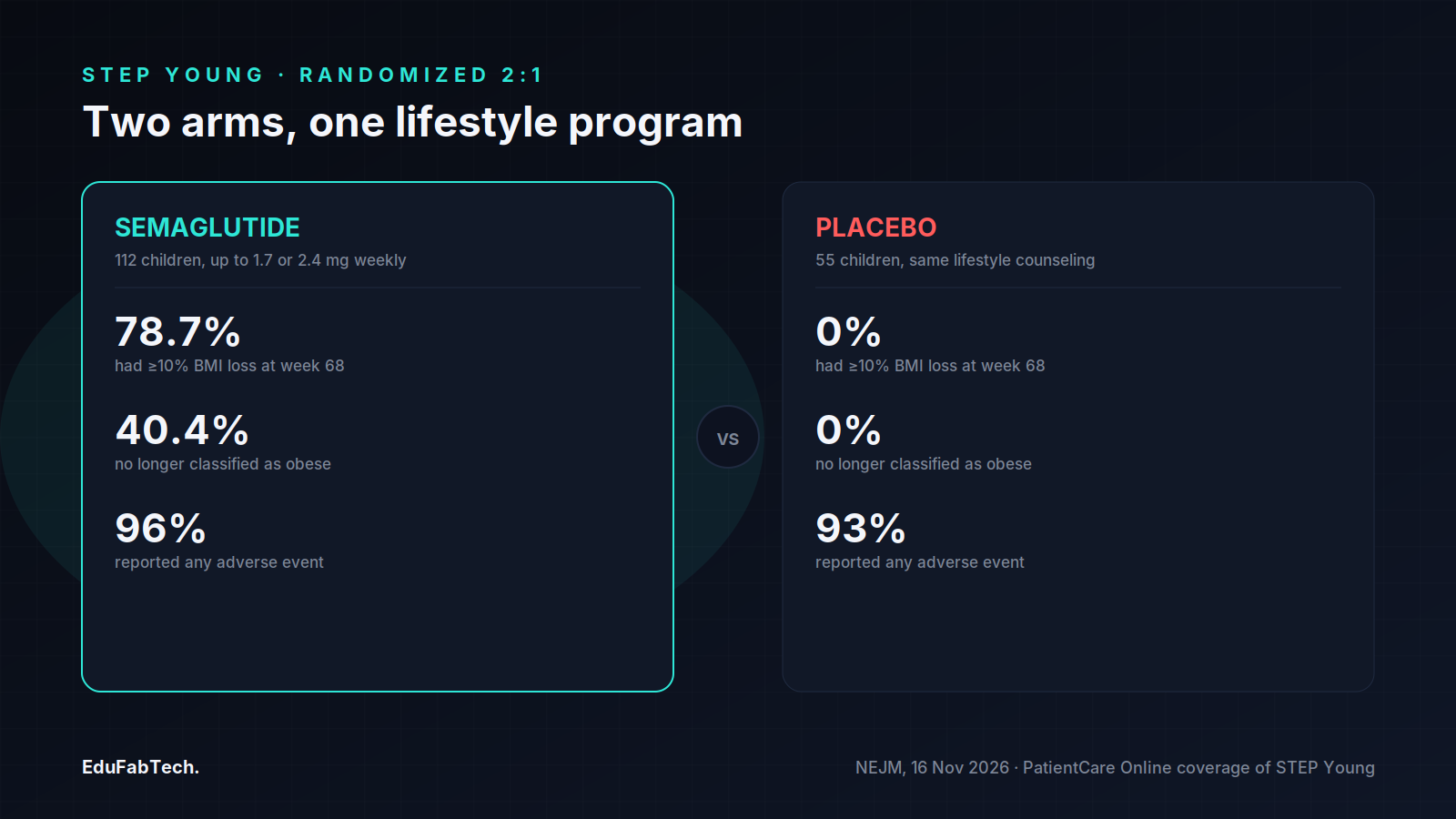
STEP Young enrolled 167 children at sites across nine countries, randomly assigning them in a 2:1 ratio to once-weekly subcutaneous semaglutide (112 children, dosed at up to 1.7 mg or 2.4 mg based on baseline body weight) or placebo (55 children), according to PatientCare Online's coverage of the trial. Both groups also received lifestyle counseling on diet and physical activity, Novo Nordisk said in its announcement. More than 85% of the children had class II or III severe obesity at the start of the trial, the company said.
The lead author is Ania M. Jastreboff, a professor of medicine and pediatrics at Yale School of Medicine and director of the Yale Obesity Research Center, according to PatientCare Online. Novo Nordisk, which makes semaglutide under the brand name Wegovy and sponsored the trial, said the study was conducted to meet post-marketing requirements set by regulatory authorities as part of the drug's broader pediatric development program.
Effect sizes at week 68 and week 104
At week 68, 78.7% of children on semaglutide had a BMI reduction of at least 10%, compared with none of the children on placebo, Novo Nordisk reported. Overall, 40.4% of children treated with semaglutide were no longer classified as having obesity at week 68, versus none in the placebo group, the company said.
The effect did not fully hold through the trial's full 104-week, double-blind period. At week 104, mean BMI change was -9.4% with semaglutide against +8.4% with placebo, according to the NEJM paper — a smaller gap than at week 68, since the placebo group's BMI kept rising while the treated group's reduction partly reversed. PatientCare Online reported that 68.6% of children on semaglutide still had at least a 10% BMI reduction at week 104, compared with none on placebo.
Safety and who left the trial
Adverse events were reported in 96% of children on semaglutide and 93% of those on placebo, PatientCare Online reported, with gastrointestinal events such as nausea, diarrhea, vomiting and constipation occurring more often in the semaglutide group. Only one child discontinued treatment because of a gastrointestinal adverse event, according to PatientCare Online's reporting of the trial. Novo Nordisk said the overall safety and tolerability profile was consistent with earlier pediatric and adult semaglutide trials, with no new safety signals and no concerns identified for growth or pubertal development. Semaglutide also carries a boxed warning for thyroid C-cell tumors and is contraindicated in patients with a personal or family history of medullary thyroid carcinoma or multiple endocrine neoplasia syndrome type 2, according to PatientCare Online's reporting on the trial.
Why the week 104 numbers come with caveats
PatientCare Online reported that the trial's secondary analyses at week 104 were not adjusted for multiple comparisons, and should be read as supportive rather than definitive. The outlet also reported that the study's authors said longer-term effects on growth, pubertal development and sustained weight management need continued investigation, and that the trial does not establish long-term cardiovascular or diabetes outcomes. The relatively small sample size and limited follow-up after children stopped treatment leave open questions about both safety and the extent of weight regain, according to that reporting.
What it means for families and researchers
Semaglutide is currently approved by the FDA for chronic weight management in adolescents aged 12 and older and in adults, but not for children younger than 12, according to PatientCare Online. The STEP Young results give regulators and clinicians a first large, randomized dataset on how the drug performs in that younger age group, where options for treating severe obesity have been limited to lifestyle intervention and, in some cases, surgery.
For researchers studying childhood obesity, the trial adds a dataset on GLP-1 receptor agonists in a younger age group than the STEP trials already completed in adolescents aged 12 and older, and it followed participants for a full 104 weeks rather than stopping at the week-68 primary endpoint.
A quick question for readers
When an article cites a study, do you open the source?
Every claim on this site links to a primary source. We want to know whether readers actually follow those links, or whether they …
Pick an answer, create a free account in a minute, and your vote counts. Already a member? Sign in
Comments 3
Comment-
The number that actually matters here isn't the headline 13.5% at week 68 - it's that gap narrowing to 9.4% vs 8.4% by week 104, with the dr…
-
The number that matters more than the headline 13.5% is what happens after week 68: by week 104 the treated group's reduction had partly rev…
-
The number I'd want pulled apart is the week 104 one, not week 68 — a 13.5% BMI drop sounds brilliant until you see it's only -9.4% by week…
Join free to read the full comments and reply Comments are between members; an account takes a minute.
Source: New England Journal of Medicine
Sources (3)
- Jastreboff AM, et al.. Semaglutide for the Treatment of Obesity in Children 6 to <12 Years of Age. The New England Journal of Medicine, 2026. nejm.org ↗ · checked 22 Nov 2026
- Novo Nordisk. STEP Young Phase 3 Data: 40.4% of Children Living with Obesity Achieved a BMI Below Obesity Threshold. Novo Nordisk, 2026. novonordisk.com ↗ · checked 22 Nov 2026
- PatientCare Online. Semaglutide Reduces BMI by 13.5% in Children Aged 6-11 in Step Young Trial. PatientCare Online, 2026. patientcareonline.com ↗ · checked 22 Nov 2026